






















The Fremantle Dockers are not interested in joining a national reserves competition, calling it “unnecessary” despite West Coast, Port Adelaide and Adelaide flagging their interest to join a league with the second-tier teams of the remaining 14 AFL clubs.
The current landscape of AFL clubs and their reserves sides has 14 clubs across Victoria, New South Wales and Queensland all playing under the VFL umbrella, with Brisbane, Gold Coast, Sydney and GWS joining the Victorian league in 2021.
The remaining four AFL clubs – West Coast, Fremantle, Port Adelaide and Adelaide – are split across their respective, historic state leagues in the WAFL and SANFL.
Watch every game of every round this Toyota AFL Premiership Season LIVE with no ad-breaks during play on Kayo. New to Kayo? Start your free trial today >
In recent times, Port Adelaide have been the most insistent of the four clubs to push for a league where the second-tier teams of all AFL clubs play each other weekly; opposed to matchups against establishments who don’t share their AFL status.
However, Foxfooty.com.au can reveal Fremantle’s desire to continue their relationship with Peel Thunder, and thus remain tied to the WAFL, feeling a national competition is “unnecessary”.
CEO on Port potentially leaving SANFL | 02:02
“The club remains committed to remaining in the WAFL, valuing the strong competition and player development opportunities it offers,” the Dockers told Foxfooty.com.au.
“Fremantle’s positive relationship with Peel Thunder has been successful for more than 10 years and we believe the alignment works well for both parties.
“As a WA-based team, we consider the logistical and financial implications of participating in a National Reserves Competition unnecessary given the benefits of our current arrangement.”
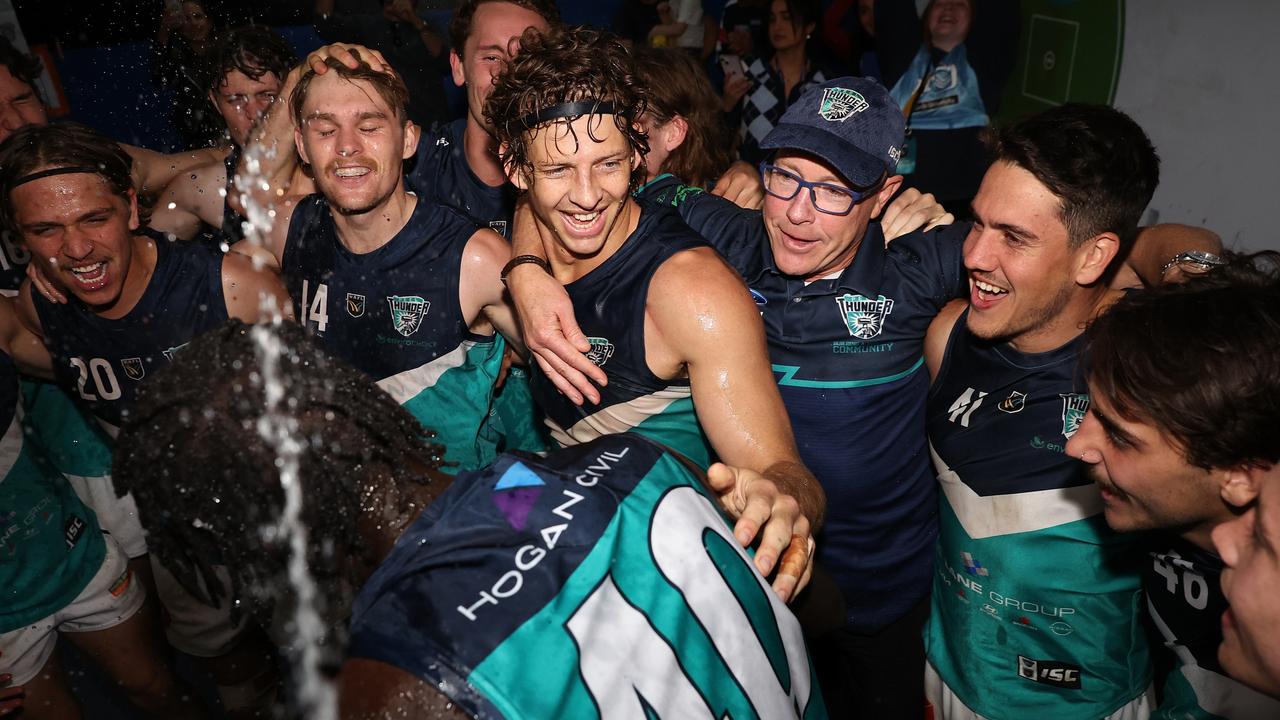
Fremantle’s agreement with Peel Thunder begun in 2013, meaning that all AFL-listed at the Dockers – who previously would have been aligned with other WAFL clubs – would play exclusively for them.
Joining the WAFL in 1997, the Thunder failed to qualify for finals in their first 17 years before merging with Fremantle; a testament to how much the club was struggling before their intervention.
During that 17-year stretch before unifying, the Thunder finished above eighth spot just once (sixth in 2008) – an incredibly unattractive record given the competition back then had nine teams.
Peel have seen great success since partnering with the Dockers however, winning back-to-back premierships not long after in 2016 and 2017.
Speaking out on the proposed national reserves competition last year, Peel chief executive Paul Lekias was in favour of Fremantle severing their relationship with Peel, should they choose to play other AFL clubs instead of compete in the WAFL.
“We would love to be stand-alone, but there is a fair bit that needs to occur for that to actually happen,” Lekias admitted.
“Being an aligned club does have an anomaly; in a sense we are trying to serve two masters.
“We are trying to do the right thing by Fremantle, and trying to showcase our own local talent at the same time.
“The agreement (to conjoin with Fremantle) started in 2013, and was due to end in 2018 – it is sort of rolling over at the moment on a notice period, so there is not a fixed agreement.”
Should either West Coast or Fremantle, or both sides, decide to join a national second-tier league, the financial repercussions for the WAFL are expected to be substantial – with West Coast’s departure alone predicted to cost other WAFL clubs over $600,000.



Discussion about this post