
























Are climate policies damaging the economy? Till Hilmar writes that despite the staggering costs of climate change, opposing climate policies on economic grounds is becoming an increasingly effective strategy for Europe’s far-right.
Far-right parties in Europe have long portrayed climate action as economic self-harm. As far back as 2015, one politician from the Alternative für Deutschland (AfD) declared that the German energy transition “must be told from the perspective of a child whose mother can no longer pay the electricity bill”.
These are not economic arguments in the technical sense, but moral stories about society: stories about decline for all, singling out who contributes, who suffers and who is to blame. In these narratives, climate policy is staged as a drama of victims and culprits.
Such tropes allow the far right to pose as emotionally controlled and rational defenders of common sense and “ordinary” people against allegedly irrational elites. And while these arguments have been made for over a decade, they are now finding more traction than ever as a broader backlash against climate policy builds.
Climate policy as economic vandalism
Arguments that cast doubt on the motives of pro-climate actors are central to this rhetoric. Pro-climate actors are portrayed as opportunists who seek attention, profit or power under the guise of saving the planet. The AfD and the Freedom Party of Austria (FPÖ) depict them as the architects of a morally corrupt redistribution scheme. Indeed, the far right talks about climate and eco-social policies in a strikingly similar way to its welfare rhetoric.
Take the example of the Klimabonus, a universal measure introduced in Austria in 2022 to offset the costs of carbon pricing, differentiated by region to account for weaker public infrastructure in rural areas. The FPÖ scandalised this measure, claiming that “asylum seekers” and “criminals” were profiting from it. A universal eco-social policy became, in far-right storytelling, a tale of injustice – a redistribution from the “deserving” to the “undeserving”, and proof, in their narrative, that climate policy benefits the “wrong” people. The measure was scrapped in 2025.
Rising energy prices have proven a particularly effective target. The far right steps in to explain inflation through simple causal stories: a “climate industry” that wants “artificially” high energy costs, governments that punish “car drivers” and the “hard-working” middle by deliberately raising prices.
After Russia’s full-scale invasion of Ukraine in 2022, these narratives became even more powerful. Amid dramatic price hikes, the far right sought to shift blame, attributing rising costs not to Russia’s war, but to domestic green policies. In Germany, the AfD’s long-standing attacks on the energy transition served as the main strategy to delegitimise public support for sanctions against Russia.
Defining realism
This idea that climate policies amount to a kind of “planned economy” – allegedly bureaucratic and driven by people who lack a basic sense of cost-efficiency – serves a clear purpose. What these actors are aiming for is to present themselves as the voice of economic reason. They fashion themselves as the only realists left, the ones who dare to tell the truth about the real economic consequences of climate policy.
Like Cassandra, the mythological prophet condemned to tell the truth but to never be believed, they warn of economic ruin that governments ignore. They mock the apocalyptic “end-of-the-world” narrative of environmentalists but create one of their own: an impending economic downfall in which ordinary citizens lose everything. This rhetorical inversion allows them to replace the climate catastrophe with the drama of economic collapse, and to depict climate-conscious actors as members of a narrow, self-interested sect, instead of advocates of a universal cause.
In interviews and focus groups conducted as part of the CIDAPE project, we often heard that while many citizens know little about the specific details of climate policies, they still tend to perceive them as “unrealistic”, especially when it comes to large-scale changes in consumption or ambitious decarbonisation targets. The far right knows how to tap into these sentiments, adopting the tone of a business-minded, pragmatic, measured approach. This has given rise to a struggle over who gets to define what realism means in the context of the green transition.
The economic costs of climate change
Of course, the numbers tell a story that contradicts the far right’s narratives. The economic costs of not acting on climate change are, by any available measure, staggering. According to the 2025 Lancet Countdown on health and climate change, extreme weather events caused $304 billion in economic losses in 2024 and unchecked climate change could erode up to 19% of global income by 2050.
Struggling industries in Europe are entangled in global competition, and China has outpaced Europe in critical sustainable technologies. Europe’s transition is too slow: in electric vehicle production, it is now lagging behind China. The far right’s supposed economic wisdom – and the concerning tendency of centrist actors to buy into its version of “realism” to downplay the backlash against decarbonisation goals – risks trapping the world in yet another fossil-fuel age, a scenario already unfolding dramatically in the United States.
Climate change exacerbates existing economic inequalities. The unequal distributional outcomes of climate policies like carbon taxation are also considerable. Rising energy prices worsen economic insecurity, as energy poverty threatens low-income households. Yet in richer welfare states such as Germany and Austria, these effects are partly offset by eco-social policies.
There is clearly a problem in how the role of climate and eco-social policy, as the main tool for addressing inequality, is communicated. As Michael Vaughan and colleagues have recently pointed out, it is alarmingly easy to misrepresent social and economic inequalities in public debate, and this holds true for climate politics as well.
We need to do a better job of connecting climate science and climate economics to what inequality actually looks and feels like for people struggling to make ends meet. And we need to a better job of explaining how climate action can make these conditions better, not worse.
For more information, see the author’s new study in Environmental Politics.
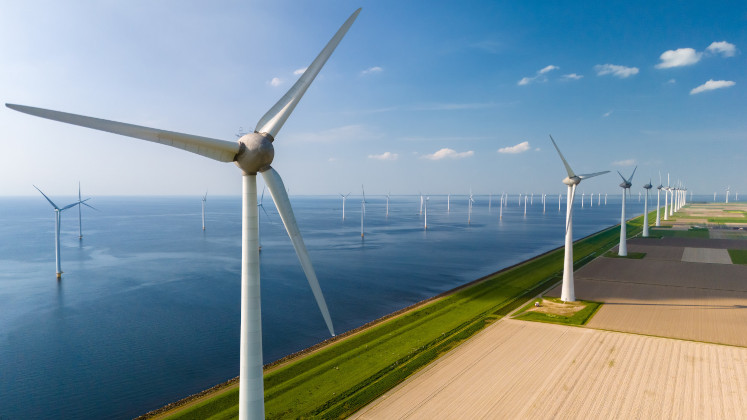
Note: This article gives the views of the author, not the position of EUROPP – European Politics and Policy or the London School of Economics. Featured image credit: fokke baarssen / Shutterstock.com





Discussion about this post