




















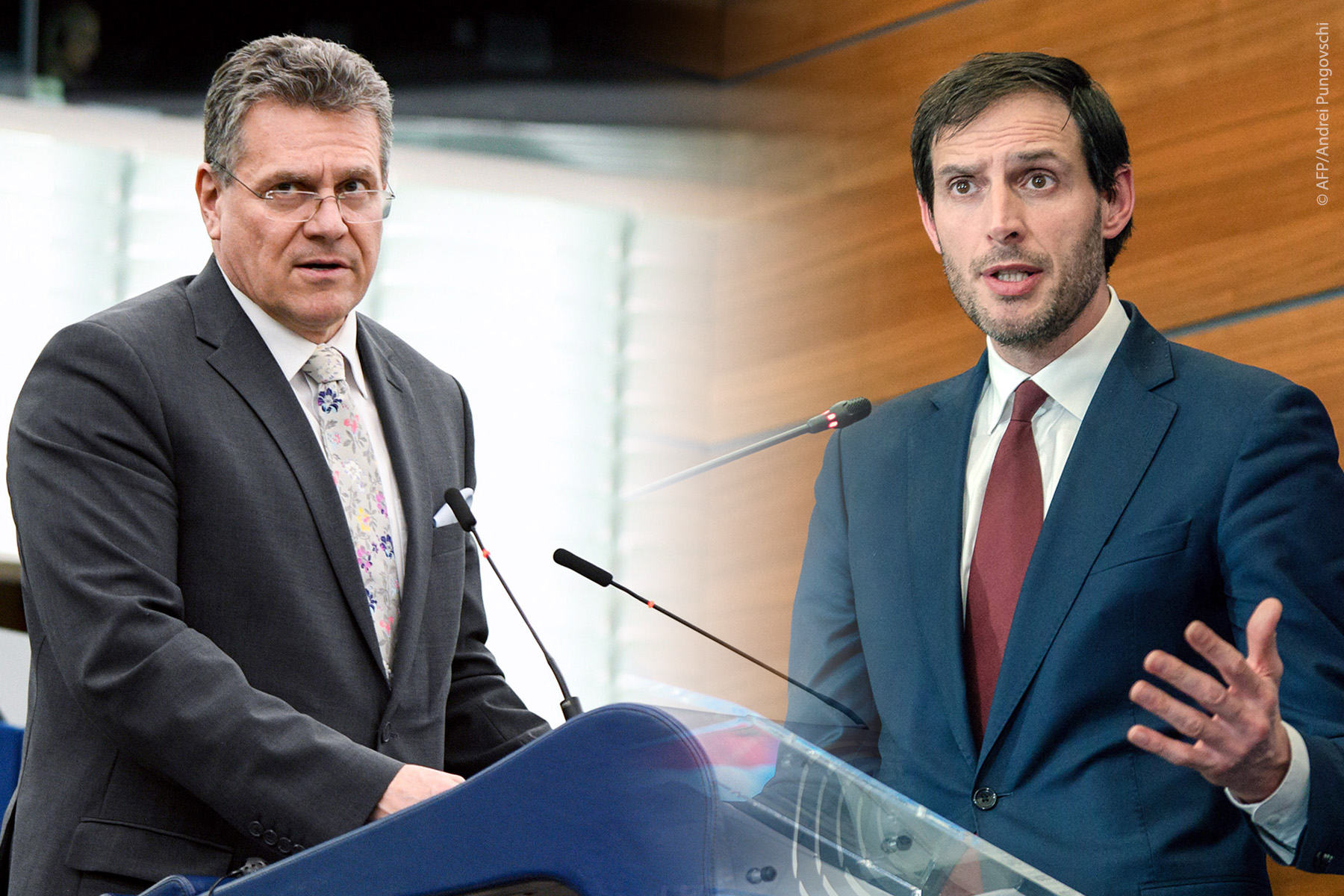
Hoekstra has been nominated as the Commissioner for climate action. The Dutch politician served as his country’s deputy prime minister and foreign minister from January 2022 until September 2023 and as finance minister from October 2017 to January 2022.
Šefčovič, who is an executive vice-president of the Commission, would assume responsibility for the European Green Deal, in addition to his current duties related to interinstitutional relations and foresight.
The reshuffle comes following the resignation of Frans Timmermans from his role as executive vice-president of the Commission in charge of the Green Deal, in order to stand in the Dutch general elections scheduled to take place in November 2023.
The hearings in Parliament will be organised by the environment committee. The industry, foreign affairs and development committees will also take part in Hoekstra’s hearing on 2 October, while the industry, transport and agriculture committees will participate in the hearing of Šefčovič on 3 October.
The procedure in Parliament
Whenever a member of the European Commission has to be replaced or there is a significant reassignment of portfolios, Parliament invites the candidates for the new jobs to hearings so that MEPs can evaluate them.
The procedure is similar to the one for the election of the Commission at the start of each term. First, the legal affairs committee examines a candidate’s declaration of financial interests to confirm the absence of conflicts of interests. This is a precondition for holding a hearing with the candidate.
The hearing is then organised by the committees dealing with the portfolio of each candidate. Before it starts, the candidate answers some questions in writing. The hearing lasts three hours and is streamed live. After the hearing the responsible committee or committees prepare an evaluation letter.
The Conference of Committee Chairs, which includes all chairs of parliamentary committees, will then assess the outcome of the hearing and forward its conclusions to the President of the Parliament and the political group leaders, who are responsible for the final evaluation and decision to close the hearings or request further action. Parliament can then proceed to a vote in plenary.
Parliament has a consultative role on individual candidates for commissioner, while it can approve or dismiss the European Commission as a whole. An agreement between Parliament and Commission requires the Commission President to consider the opinion of Parliament on individual candidates and changes in the composition of the Commission.
As always, when Parliament votes on individual candidates, voting is by secret ballot and requires a simple majority.







Discussion about this post