
















The sunset paints the Zaporizhzhia countryside with an orange hue as a friendly figure opens the gates to a rundown shanty.
“Welcome,” says Nezlamna, ushering us in.
Hidden under a leafy combination of grapevines and camouflage netting, the derelict property now houses several Ukrainian soldiers fighting nearby on the southern frontline. Among them is Nezlamna, a mother of three — two daughters and a son.
“I last saw them in April,” she says, admitting the distance makes their relationship difficult. “I even try to call less, not to get upset. And so that they don’t get upset.”
Nezlamna — which means ‘unbreakable’ in Ukrainian — is one of thousands of women who have joined the ranks of Ukraine’s armed forces to help defend the country from Russia’s invading army. For her, military service began well before Russia’s full scale invasion.
She joined in 2016, after Moscow illegally annexed Crimea in 2014, and has been fighting Russian-backed separatists and Russian forces ever since.
Currently leading a reconnaissance unit on the southern front line, Nezlamna says she is fighting for her children’s future, for their right to live in a “flourishing” Ukraine.
“Their task will be far more difficult – they will have to rebuild the country and bring it back to its feet. And that’s much more difficult than to recapture the borders,” she says.
It may not be as difficult as rebuilding Ukraine, but pushing Russia out means risking her life daily.
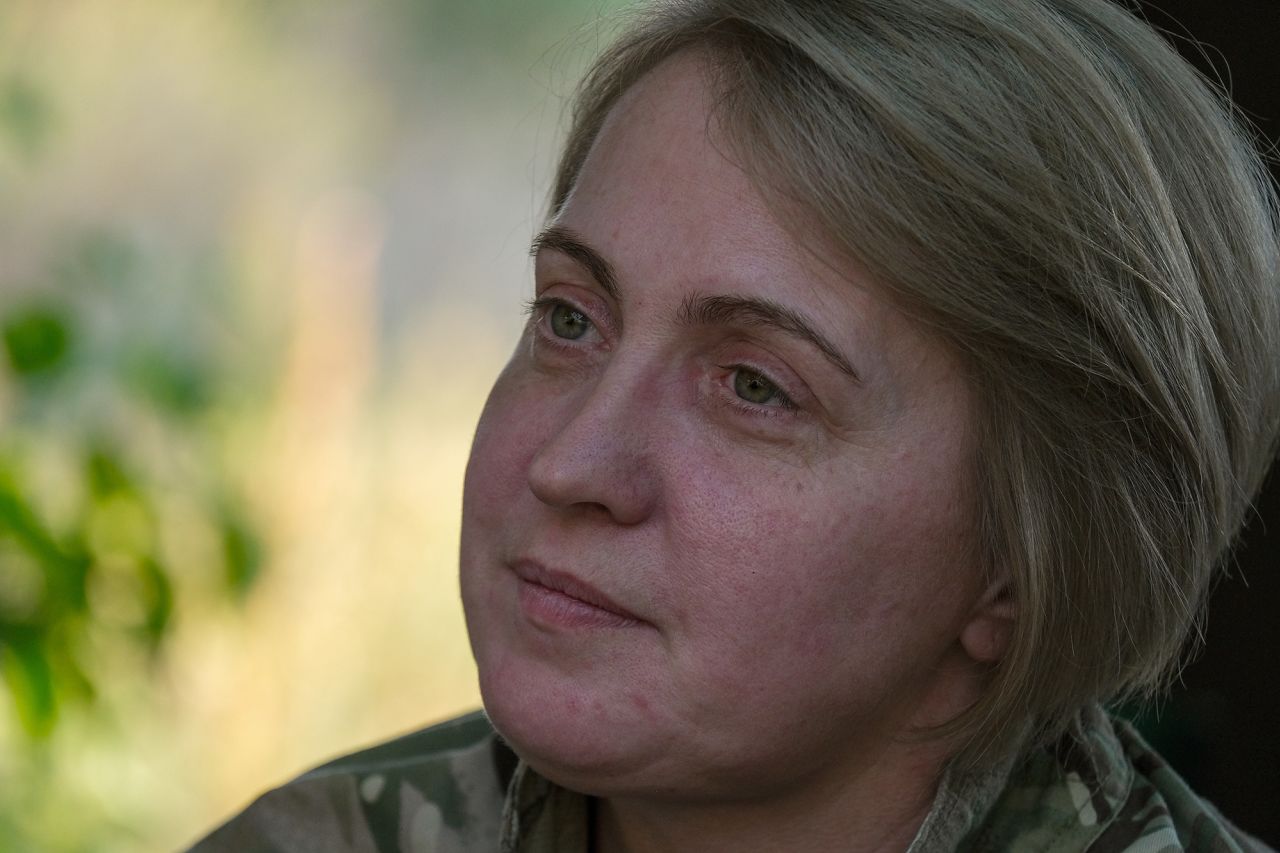
“I think, I’ve seen pretty much everything in my life already, I can hardly be surprised by anything in combat. Yes, of course, there’s a risk, there’s constant risk,” she says, shrugging her shoulders, downplaying the actual danger.
“There’s shelling, the self-destructing drones may fly, and one moment you are asleep and the next moment – your house is gone. No one is immune to when exactly they will die,” she adds.
Her biggest worry is leaving her children.
“The fear is always present,” she says. “Somehow I manage to control it even if I understand this is war, and we all won’t return home alive.”
That horrifying possibility sometimes fuels fiery arguments at home.
“They still sometimes get offended that I’m not with them, when they need a parent. However, they understand that somebody has to do what I’m doing,” she says.
Her main ally is her husband, himself a soldier serving with an artillery unit. Before her recent promotion they were in the same battalion.
“We have our own family values, same views, one direction,” she says. “We have been working alongside each other since 2016.”
Despite the dangers of her work and how much she misses a sense of normalcy and a stable life, close to her children, she’s pragmatic: “It’s not on the horizon,” she says.
Russia has a large army, and even if Nezlamna and her fellow soldiers continue to gain ground, it is going to be a slow grind before Moscow completely leaves Ukraine.






Discussion about this post