
























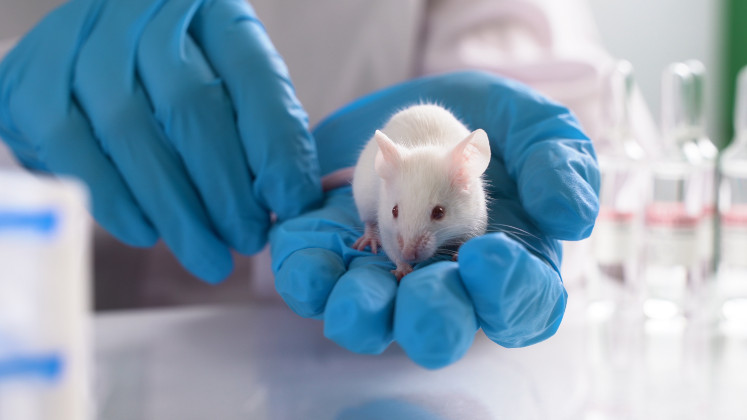
Is the use of laboratory animals ethical? Carrie Friese argues that while there are no easy answers to this question, humans can learn a great deal by considering the seemingly far away life of a laboratory mouse.
In the United Kingdom and Europe, laboratory animals – including mice, rats and fish – have legal rights. They have the right not to suffer needlessly. These animals also have the right to certain freedoms, including freedom from things like hunger and thirst as well as the freedom to behave in ways deemed normal for their species. But it is freedom from suffering – physical pain being foremost but also emotional and social pain – that is in many ways the corner stone to animal welfare in the UK and Europe.
Many consider these legal rights to be insufficient and argue that animals should have the right to not be killed or the right to not to be used for the betterment of another, human species. These critiques are important for showing that the law can and does frame the rights of other species in other contexts differently (e.g. most humans and endangered animals have the legal right to not be killed). Nonetheless, the regulations protecting laboratory animals in the UK and Europe are generally considered the strictest in the world, providing the greatest protection for these animals.
A mouse in a cage
It is in this legal context that my Wellcome Trust-funded research and resulting book A Mouse in a Cage: Rethinking Humanitarianism and the Rights of Lab Animals probes the everyday work involved in ensuring an animal is free from needless suffering.
There is vital paperwork to be sure, which works to deem animal suffering worthwhile or not. There is also vital care for an animal who will eventually be killed in order to become scientific data. There is also the work of killing to end an animal’s suffering. Drawing on observations of the care that is involved in doing science, I have named this work “more-than-human humanitarianism”. This terminology reflects my focus on the United Kingdom, where in the 19th century animals were among the social groups deemed both “inferior” and “in need of care” in cultivating a humanitarian ethos.
A Mouse in a Cage is an act of remembering the often-invisible laboratory mice and rats that are part of medicine as well as the invisible work involved in both caring for and killing these animals. I do this neither to reject using animals in biomedical science (as animal rights activists would) nor to dismiss concerns regarding the use of these animals (as science activism often does).
Instead, I argue that it is important to meditate upon and question the scale of animal use that is part of biomedicine. Whenever medicine becomes a salve for human suffering or a means to prolong human life, the lives of other-than-human species have been sacrificed toward that end. And people have had to manage the emotional labour that this sacrifice entails.
Emotions and ethics
To address these more affective dimensions of doing science, I juxtapose vignettes from my research fieldnotes with fiction. There has been a call for what is called “lyrical sociology”, where sociological writing draws on literary writing to convey the emotional textures of the situation under study.
I do not consider myself equipped with this kind of writing skill, and so I instead resonate my fieldnotes with fiction to convey the emotionality that I experienced while conducting this research. In the process, I hope to convey what it feels like to do the work required for enacting, in practice, the legal rights of laboratory animals. Indeed, one of the goals of my book is to understand how people manage their realities that are otherwise institutionally erased.
There is a moral rationale for juxtaposing ethnographic fieldnotes with literary fiction as well. If animal rights are built upon law to instantiate formal ethics, I build upon fiction to name the corollary virtue ethics that are required. Here I draw on Martha Nussbaum’s Poetic Justice.
Nussbaum has argued that fiction is an important place where compassion is taught, for it is a key place where people step outside of themselves and imagine what someone else’s life feels like. Nussbaum’s work is foundational for one argument I make – that both formal and virtue ethics are required and practiced with laboratory animals. Virtue ethics, however, risk being eroded without recognising the time necessary for both its practice and its acknowledgement.
The human of humanitarianism
I do not offer a way out of the ethical dilemmas related to using animals for medical therapeutics. But my work does provide a way in. I have no easy solution to the vastness of the sacrificial logic that more-than-human humanitarianism relies upon.
However, making visible the work involved in medical science can show the extent to which human health depends upon the suffering and death of animals. It also provides an opportunity to reflect on the inequalities that this instantiates – not only between animals and humans but also amongst humans.
In the process, I argue that laboratory animals offer a kind of prism for reflecting upon the human of humanitarianism. I posit that humanitarianism can learn something by considering the seemingly far away life of a laboratory mouse.
For more information, see the author’s new book, A Mouse in a Cage: Rethinking Humanitarianism and the Rights of Lab Animals (New York University Press, 2025).
Note: This article gives the views of the author, not the position of EUROPP – European Politics and Policy or the London School of Economics. Featured image credit: Egoreichenkov Evgenii / Shutterstock.com








Discussion about this post