


























Does EU Cohesion Policy funding help local politicians win re-election? New research by Marco Di Cataldo and Elena Renzullo demonstrates that incumbent mayors gain electoral support when they attract substantial and visible EU-funded projects.
The European Union’s Cohesion Policy is one of the world’s largest place-based development programmes, distributing billions of euros each year to reduce regional disparities and stimulate local economic development. But alongside the economic ambitions of these investments lies an important political question: do EU funds also influence how citizens vote?
In an era of rising Euroscepticism, and with negotiations for the 2028-2034 EU programming period already prompting debates over the size, targets and governance of Cohesion Policy, this question has become more salient than ever.
Cohesion Policy is often presented by its promoters as a tool for strengthening European identity. By improving schools, roads, parks, hospitals and job opportunities, EU-funded projects directly affect citizens’ daily lives. If voters associate these improvements with local leaders, EU funds may shape electoral outcomes at the municipal level.
However, we still know relatively little about these local political effects. While research has documented how Cohesion Policy can reduce Euroscepticism or influence national elections, the implications for mayoral politics remain underexplored – even though the policy’s bottom-up governance structure gives local politicians considerable influence over project design, funding applications and implementation. If political returns are to be found anywhere, they should be found where EU investments are most visible: in towns and cities.
EU money decisively shapes local election outcomes
In a recent study, we analyse how EU development spending affects mayoral re-elections. Drawing on all the 1.5 million EU projects implemented in Italy during the 2007-13 and 2014-20 EU programming periods, and combining them with comprehensive municipal election data, this work demonstrates that EU money can decisively shape local election outcomes.
The findings reveal three key insights. First, voters reward mayors who secure more – and more visible – EU-funded projects. Second, the political effect of EU funds is only visible in economically lagging regions and in places experiencing faster economic growth. Finally, different types of EU investments carry different electoral weight.
The central finding is clear: EU funding increases the electoral support of incumbent mayors, but not all funds are equal. We find that a 1% increase in EU funds for newly started projects generates roughly a 1% increase in a mayor’s margin of victory.
The effect is less consistent for projects completed during the legislature, which often stem from previous administrations. The total volume of EU funds received also raises the vote margins of the incumbent mayors. These patterns hold across a wide range of empirical tests and remain robust to alternative specifications.
Investment size and economic context matter
The effect of Cohesion Policy on local voting behaviour is non-linear. Voters appear to reward incumbents only when EU-funded interventions reach a meaningful scale.
Several findings support this. When splitting municipalities by the amount of EU funds received, only those receiving above the median amount show any political returns. Municipalities in Italy’s less developed regions – Campania, Calabria, Apulia and Basilicata – also show consistently strong positive electoral effects across all categories of EU funds.
By contrast, in more developed or transitional regions, the political effect is essentially zero. This asymmetry aligns with Eurobarometer evidence indicating that awareness and visibility of Cohesion Policy are higher in areas receiving larger amounts of support.
The electoral boost generated by EU funds is also closely tied to local economic conditions. We find that EU funds only significantly increase re-election margins in municipalities experiencing faster economic growth. In these areas, a 1% rise in EU funding corresponds to a 3% increase in the incumbent’s margin of victory.
This suggests that voters recognise the importance of European funds only if economic conditions are improving. Citizens may be assuming that the positive local economic trajectory is attributable to the effective implementation of EU projects.
Not all EU projects are created equal
We also investigate whether the type of EU investment matters, grouping projects into public services (e.g. schools, health facilities and social services), infrastructure (e.g. roads, transport and public spaces) and business support (e.g. grants to firms).
We find that service-enhancing and infrastructure projects significantly boost incumbent support, while business-oriented projects do not. This pattern is intuitive: public goods are highly visible, widely consumed and easily associated with political leadership, whereas support to private firms is often less visible and benefits narrower groups.
The political dividends of European integration
Our research carries important lessons for the future of EU Cohesion Policy. First, it shows that EU funds strengthen local democratic accountability. When mayors are rewarded for successfully attracting and implementing development projects, the EU’s place-based model mobilises local political capacities rather than bypassing them.
Second, effectiveness and visibility are politically essential. Large, high-impact interventions that improve public services and infrastructure are more likely to shape voting behaviour and enhance citizens’ appreciation of both local government and the EU. Third, the political benefits of Cohesion Policy are concentrated in Europe’s lagging regions, where needs are greatest and EU support is more visibly transformative.
More broadly, these findings contribute to a growing understanding that the EU’s legitimacy is built not only through national politics but also through everyday experiences in towns and cities. When EU-funded projects deliver real improvements in local services, infrastructure and economic opportunity, they create a virtuous circle of development and political support.
As the EU debates the future of its regional policy in an increasingly turbulent political climate, this evidence suggests that well-designed and well-implemented Cohesion Policy projects can strengthen both local development and democratic resilience.
For more information, see the authors’ recent study in the Journal of Economic Geography.
Note: This article gives the views of the authors, not the position of LSE European Politics or the London School of Economics.
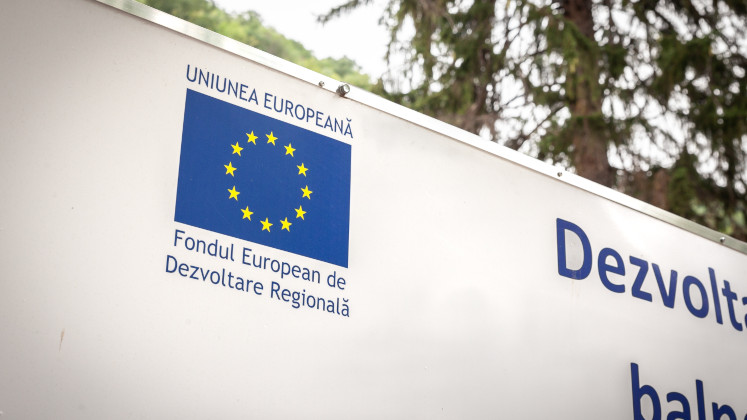
Image credit: BalkansCat provided by Shutterstock.






Discussion about this post