




















Donald Trump has criticised other NATO members for refusing to pay their fair share for defence. But how big an issue is free-riding in NATO? Using an innovative research design, Ringailė Kuokštytė, Denis Ivanov, Vainius Indilas and Vytautas Kuokštis find little evidence that post-Cold War entrants to NATO have cut defence spending since joining.
Donald Trump has repeatedly claimed that NATO allies are not paying their fair share for common defence. The conventional view is that he is right, at least in relation to the pre-2014 period where many NATO members are said to have underinvested in defence because their membership allowed them to rely on other allies, chiefly the United States.
This argument echoes findings in classic work on alliance-induced moral hazard and is consistent with recent research on patterns of interdependence between allies. The key takeaway is that a NATO member state is likely to decrease its defence spending if other allies increase theirs, to the extent that collective defence and security is shared without constraint.
The general implication of this research is that in the absence of NATO, allies would spend more. But is this really the case? In a new working paper, we test this idea by examining whether joining NATO leads countries to spend less on defence as a percentage of GDP than they otherwise would have.
NATO and the threat of Russia
We estimate what NATO entrants would have spent without joining using a credible benchmark of comparable non-members. Our approach is to compare post-Cold War joiners to countries that plausibly faced broadly similar exposure to Russian pressure but did not enter NATO in the same period.
This helps us compare like with like on the threat environment and better isolate what changes are associated with membership itself. We restrict the comparison group to states that actively sought NATO membership after the Cold War (even if they did not ultimately enter). We also expand the sample to include neutral European countries, which increases the number of observations and improves statistical power.
Archival evidence from US diplomacy with aspiring NATO joiners underscores why the emphasis on Russia matters. Threat perceptions by countries in Russia’s proximity moved quickly over time and unexpectedly. In the mid-1990s, for example, concerns rose about political uncertainty in Russia ahead of the 1996 election, and leaders in Central and Eastern Europe warned US counterparts that Moscow’s stance on enlargement was hardening.
At the same time, archives also highlight a pronounced regional dimension in how the threat is perceived. For instance, in the mid-1990s, US officials, viewing events “from the distance of thousands of miles away”, downplayed Russian intimidation of the Baltic states as largely rhetorical.
Because threat perceptions are shaped by lived experience and local context, they are hard to capture consistently across countries and over time. That is why careful country selection is central to our strategy for making credible comparisons.
There is no evidence that new members cut spending after accession
Focusing on post-Cold War entrants, we find no evidence that NATO membership leads countries to cut defence spending. If anything, the estimated effects tend to be slightly positive, though not statistically distinguishable from zero.
Importantly, the estimates are precise enough to rule out meaningful free-riding effects: we can confidently exclude medium- to long-run spending reductions of the order of roughly 0.2–0.3 percentage points of GDP.
We also examine the NATO Membership Action Plan (MAP), a key step on the road to membership that has received less attention, to assess whether governments begin adjusting their defence spending in anticipation of joining the alliance.
We find the same pattern when we shift the focus from formal membership to the MAP. Here, too, there is no sign of systematic cutbacks. Nor do we see clear evidence of anticipation, implying that countries do not appear to reduce spending in the years leading up to membership.
Should we still be worried about free-riding?
Our findings present clear evidence against the idea that NATO should restrict the accession of new members on the grounds they will systematically underinvest in defence spending once they join.
This does not mean that free-riding is irrelevant. It may be that any temptation to underinvest is checked by alliance guidelines, peer pressure and expectations about what it means to be a credible ally. Such an impulse may also be outweighed by the security environment itself, especially when there are clear threats present.
New accessions could also affect the spending decisions of existing members, a question our research does not directly address. Finally, even when overall budgets remain stable, governments could still shift resources within defence, for example from equipment to personnel.
For more information, see the authors’ accompanying working paper. This project has received funding from the Research Council of Lithuania (LMTLT), agreement No S-MIP-24-33.
Note: This article gives the views of the authors, not the position of LSE European Politics or the London School of Economics.
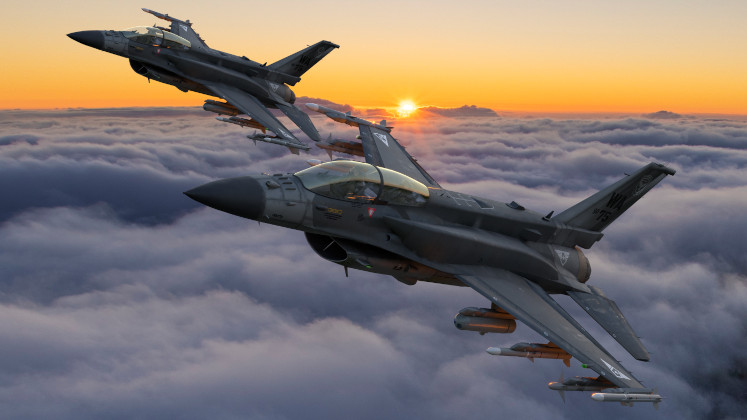
Image credit: Mike Mareen provided by Shutterstock.




Discussion about this post