

















A new Pact for the Mediterranean was launched by the EU and southern neighbourhood countries on 28 November. Emanuele Errichiello writes that despite the fanfare of the launch, the Pact looks more like a rearticulation of the EU’s existing approach than a genuine paradigm shift.
When the European Commission announced the creation of a Commissioner for the Mediterranean last year, appointing Dubravka Šuica, some hoped for a long-awaited revival of the Euro-Mediterranean regional project, as envisaged in the Barcelona Process.
Others – myself included – worried that this new role might simply consolidate the EU’s “pragmatic turn” towards its southern neighbourhood, prioritising border management, crisis containment and economic interests over genuine political partnership.
The new portfolio appeared to confirm two underlying trends: the death of EU-led attempts to pursue region-building in the Mediterranean and a shift toward an interest-driven approach centred on migration control and energy. The new Pact for the Mediterranean, launched on 28 November, effectively makes these trends more concrete – but also complicates them.
The Pact for the Mediterranean
On the one hand, the new pact clearly confirms the idea that the Mediterranean is now governed through a dedicated, self-standing policy track within the Commission’s wider Directorate-General for the Middle East, North Africa and the Gulf (DG MENA).
This is important because it effectively institutionalises the decoupling of the southern neighbourhood countries from other states in the Western Balkans, Eastern Europe and the South Caucasus, which are all approached through the Directorate-General for Enlargement and the Eastern Neighbourhood (DG ENEST).
The pact is explicitly presented as the strategic framework for the new Commissioner for the Mediterranean’s work, with a dedicated Action Plan and monitoring architecture to follow. It was also deliberately timed to coincide with the 30th anniversary of the 1995 Barcelona Declaration, underlining the claim that this is the new reference point for Euro-Mediterranean relations.
However, the foundations of the toolkit are familiar: investment plans, regulatory convergence, security cooperation, migration management and sectoral dialogues – all designed and largely steered from Brussels. The pact thus seems to repackage the EU’s existing instruments into a new flagship, hoping that fresh branding and institutional visibility will deliver what previous frameworks could not.
Same logic, new packaging?
Substantively, the pact is built around three pillars: “People”, “Stronger, more sustainable and integrated economies” and “Security, preparedness and migration management”. On paper, this looks like a fairly balanced agenda. In practice, the distribution of political weight across these pillars tells a more intriguing story.
The “People” pillar puts forward a set of attractive ideas on civic service schemes, cultural projects and support for civil society. These are designed to respond to criticisms that Euro-Mediterranean relations are overly technocratic and neglect societal actors.
Yet, most of these proposals are institution-heavy and funding-dependent. Their success will hinge on sustained political will in EU member states, domestic buy-in and administrative capacity on both shores – all factors that have historically undermined similar projects.
By contrast, the pillar on security and migration seems more concrete and operational. It bundles together cooperation on border management, returns and readmission, anti-smuggling operations, Common Security and Defence Policy missions, maritime security and cable protection.
This is often linked to existing tools like the European Peace Facility and other EU initiatives. Hence, the parts of the Pact that speak most directly to the immediate political pressures inside the EU – irregular migration, perceived instability, hybrid threats – are precisely those with the clearest mechanisms and timelines.
The economic and energy pillar sits somewhere in between. Its flagship is the Trans-Mediterranean Energy and Clean Tech Cooperation initiative, which promises to help the EU decarbonise and diversify away from Russian gas, support green industrialisation in North Africa and make the Mediterranean a hub for renewables and clean tech value chains.
This could open up real opportunities for partner countries, but it also risks locking the region into a familiar pattern, where the South primarily functions as nothing more than a provider of energy and strategic infrastructure for European markets. Seen from this angle, the Pact is less a break with the pragmatic turn of the new Commissioner’s mandate than its institutional consolidation: a comprehensive, more polished expression of the same underlying logic.
What order in the Mediterranean?
The central question raised by the Pact is not whether the EU is still committed to the Mediterranean. The question is what kind of order, if any, the Union is trying to shape – or preserve – in the region.
Rhetorically, the Pact talks the language of “co-ownership” and “joint responsibility”, but the deeper structure remains unmistakably asymmetrical. The EU sets the agenda, designs instruments and controls the bulk of the resources. Southern partners are consulted, but their role is largely to align with frameworks, standards and priorities defined in Brussels. This can arguably have important implications on how such partners perceive the EU vis-à-vis other potential foreign actors.
This is particularly visible in the way the Pact handles problems that are deeply political, such as authoritarian drift, shrinking civic spaces, endemic corruption or social protest. These issues are almost absent from the text, replaced by technocratic references to “good governance”, the “investment climate”, “capacity-building” and “resilience”. Certain normative issues, once core to the EU’s agenda, seem therefore to have been relegated to a secondary level.
At the same time, the Pact indirectly acknowledges that the Mediterranean can no longer be treated as a quasi-exclusive European sphere of influence, as in the 1990s and early 2000s. Gulf monarchies, Turkey, Russia and China are all recognised as significant players, and the EU explicitly envisages triangular cooperation with, for instance, Gulf partners.
There is a clear sense, even in the EU’s vision, that the “Common Mediterranean Space” defined in the document is a crowded, polycentric space where the EU must negotiate its position rather than simply project it.
This creates a tension at the heart of the Pact. The EU is trying to preserve a degree of control – especially on security and economic issues – in a regional environment that is increasingly resistant to unilateral agenda-setting.
If implementation fails to deliver visible benefits, the Pact risks reinforcing precisely the narratives it seeks to counter: that the EU is primarily interested in outsourcing its border control, securing energy and protecting its own markets, while leaving deeper structural problems unaddressed, potentially leading the southern partners to look elsewhere for political cooperation.
Three political tests
Whether the Pact becomes the starting point for a more functioning order or simply the latest, more securitised iteration of a long Euro-Mediterranean story will depend less on its hundreds of pages of initiatives than on three political tests.
First, will member states treat the Pact as a common framework, or will they continue to pursue competing bilateral deals with key partners, especially on migration and energy?
Second, will the “people-centred” parts of the Pact receive the same political attention and funding as its security and migration components, in an attempt to compete with emerging symbolic alternatives?
And third, will the EU prove willing to confront uncomfortable questions about its own role in the region’s authoritarian entrenchment and socio-economic inequalities, rather than hiding them behind technical language for the sake of its political and economic interests?
For now, the Pact for the Mediterranean looks more like a rearticulation of the EU’s existing approach – especially that of post-2011 and post-2015 – than a real paradigm shift. It puts a new label – and a new Commissioner – on an old dilemma: how to reconcile the EU’s security and economic interests with the promise of a partnership based on shared prosperity and mutual accountability. Whether this time will be different remains an open question.
Note: This article gives the views of the author, not the position of LSE European Politics or the London School of Economics.
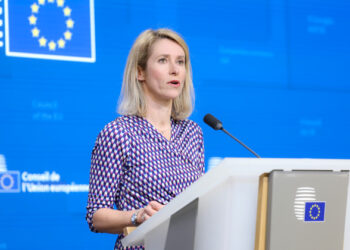
Image credit: EC – Audiovisual Service.





Discussion about this post