





Monday, April 27, 2026
Europe Times
  • Home
  • News
    • All
    • Business
    • Politics
    • Science
    • World
    Opening: 27-30 April plenary session in Strasbourg | News | European Parliament

    Opening: 27-30 April plenary session in Strasbourg | News | European Parliament

    AI: press conference debrief on the negotiations to update EU rules | News | European Parliament

    AI: press conference debrief on the negotiations to update EU rules | News | European Parliament

    2027 EU budget: press conference with lead MEP on Tuesday at 13.30 | News | European Parliament

    2027 EU budget: press conference with lead MEP on Tuesday at 13.30 | News | European Parliament

    Rule of law in the EU: press conference on Tuesday 28 April at 15.30 CEST | News | European Parliament

    Rule of law in the EU: press conference on Tuesday 28 April at 15.30 CEST | News | European Parliament

    Consent-based definition of rape in EU law: press conference Tuesday 28 April | News | European Parliament

    Consent-based definition of rape in EU law: press conference Tuesday 28 April | News | European Parliament

    Metsola to EU leaders: “Europe cannot face a new era with an old budget” | News | European Parliament

    Metsola to EU leaders: “Europe cannot face a new era with an old budget” | News | European Parliament

    Trending Tags

    • Trump Inauguration
    • United Stated
    • White House
    • Market Stories
    • Election Results
  • Education
    Mafia, local governments and money – how fighting collusion reshapes EU investment –

    Mafia, local governments and money – how fighting collusion reshapes EU investment –

    Can Tisza restore Hungarian democracy? – LSE European Politics

    Can Tisza restore Hungarian democracy? – LSE European Politics

    How Hungary’s Tisza Party won everything, everywhere, all at once

    How Hungary’s Tisza Party won everything, everywhere, all at once

    In the age of AI, citizens may become more critical of human decision-makers

    In the age of AI, citizens may become more critical of human decision-makers

    Italy’s referendum – is the Italian right as united as it seems?

    Italy’s referendum – is the Italian right as united as it seems?

    What skills policy can tell us about the tunnel vision of policymakers

    What skills policy can tell us about the tunnel vision of policymakers

  • Tech
    • All
    • Apps
    • Gadget
    • Mobile
    • Startup
    How Hungary’s Tisza Party won everything, everywhere, all at once

    How Hungary’s Tisza Party won everything, everywhere, all at once

    Why enlargement is now a strategic priority for the EU

    Why enlargement is now a strategic priority for the EU

    Will reforms to the Better Regulation policy damage the EU’s legitimacy?

    Will reforms to the Better Regulation policy damage the EU’s legitimacy?

    The STEM gender gap – pipeline vs choice

    The STEM gender gap – pipeline vs choice

    Can Europe achieve digital sovereignty? – EUROPP

    Can Europe achieve digital sovereignty? – EUROPP

    The Dutch parliamentary election – not quite a “return to the centre”

    The Dutch parliamentary election – not quite a “return to the centre”

    Trending Tags

    • Nintendo Switch
    • CES 2017
    • Playstation 4 Pro
    • Mark Zuckerberg
  • Entertainment
    • All
    • Gaming
    • Movie
    • Music
    • Sports
    Titus Welliver & Trevante Rhodes Join ‘The Night Agent’

    Titus Welliver & Trevante Rhodes Join ‘The Night Agent’

    ‘Michael’ Breaks Box Office Records in First Weekend

    ‘Michael’ Breaks Box Office Records in First Weekend

    Best Robert Pattinson Movies of All Time Ranked

    Best Robert Pattinson Movies of All Time Ranked

    ‘FernGully’ to be remade in Live Action

    ‘FernGully’ to be remade in Live Action

    Amanda Seyfried & Rachel Zegler to Join Musical Pic ‘Octet’

    Amanda Seyfried & Rachel Zegler to Join Musical Pic ‘Octet’

    Best Movies Adapted from Video Games Ranked

    Best Movies Adapted from Video Games Ranked

  • Lifestyle
    • All
    • Fashion
    • Food
    • Health
    • Travel
    Was Tisza’s victory in Hungary the beginning of the end for illiberalism?

    Was Tisza’s victory in Hungary the beginning of the end for illiberalism?

    Can Tisza restore Hungarian democracy? – LSE European Politics

    Can Tisza restore Hungarian democracy? – LSE European Politics

    How Péter Magyar and Tisza remade the Hungarian party system – LSE European Politics

    How Péter Magyar and Tisza remade the Hungarian party system – LSE European Politics

    How Hungary’s Tisza Party won everything, everywhere, all at once

    How Hungary’s Tisza Party won everything, everywhere, all at once

    It’s time for a more pragmatic EU-China trade relationship

    It’s time for a more pragmatic EU-China trade relationship

    What should we expect from the next Hungarian government?

    What should we expect from the next Hungarian government?

    Trending Tags

    • Golden Globes
    • Game of Thrones
    • MotoGP 2017
    • eSports
    • Fashion Week
  • Review
    Best Robert Pattinson Movies of All Time Ranked

    Best Robert Pattinson Movies of All Time Ranked

    Best Movies Adapted from Video Games Ranked

    Best Movies Adapted from Video Games Ranked

    ‘Mr. Burton’ Exclusive Interview: Toby Jones

    ‘Mr. Burton’ Exclusive Interview: Toby Jones

    Movie Review: ‘Over Your Dead Body’

    Movie Review: ‘Over Your Dead Body’

    Movie Review: ‘Michael’

    Movie Review: ‘Michael’

    Movie Review: ‘Hamlet’ (2026)

    Movie Review: ‘Hamlet’ (2026)

No Result
View All Result
  • Home
  • News
    • All
    • Business
    • Politics
    • Science
    • World
    Opening: 27-30 April plenary session in Strasbourg | News | European Parliament

    Opening: 27-30 April plenary session in Strasbourg | News | European Parliament

    AI: press conference debrief on the negotiations to update EU rules | News | European Parliament

    AI: press conference debrief on the negotiations to update EU rules | News | European Parliament

    2027 EU budget: press conference with lead MEP on Tuesday at 13.30 | News | European Parliament

    2027 EU budget: press conference with lead MEP on Tuesday at 13.30 | News | European Parliament

    Rule of law in the EU: press conference on Tuesday 28 April at 15.30 CEST | News | European Parliament

    Rule of law in the EU: press conference on Tuesday 28 April at 15.30 CEST | News | European Parliament

    Consent-based definition of rape in EU law: press conference Tuesday 28 April | News | European Parliament

    Consent-based definition of rape in EU law: press conference Tuesday 28 April | News | European Parliament

    Metsola to EU leaders: “Europe cannot face a new era with an old budget” | News | European Parliament

    Metsola to EU leaders: “Europe cannot face a new era with an old budget” | News | European Parliament

    Trending Tags

    • Trump Inauguration
    • United Stated
    • White House
    • Market Stories
    • Election Results
  • Education
    Mafia, local governments and money – how fighting collusion reshapes EU investment –

    Mafia, local governments and money – how fighting collusion reshapes EU investment –

    Can Tisza restore Hungarian democracy? – LSE European Politics

    Can Tisza restore Hungarian democracy? – LSE European Politics

    How Hungary’s Tisza Party won everything, everywhere, all at once

    How Hungary’s Tisza Party won everything, everywhere, all at once

    In the age of AI, citizens may become more critical of human decision-makers

    In the age of AI, citizens may become more critical of human decision-makers

    Italy’s referendum – is the Italian right as united as it seems?

    Italy’s referendum – is the Italian right as united as it seems?

    What skills policy can tell us about the tunnel vision of policymakers

    What skills policy can tell us about the tunnel vision of policymakers

  • Tech
    • All
    • Apps
    • Gadget
    • Mobile
    • Startup
    How Hungary’s Tisza Party won everything, everywhere, all at once

    How Hungary’s Tisza Party won everything, everywhere, all at once

    Why enlargement is now a strategic priority for the EU

    Why enlargement is now a strategic priority for the EU

    Will reforms to the Better Regulation policy damage the EU’s legitimacy?

    Will reforms to the Better Regulation policy damage the EU’s legitimacy?

    The STEM gender gap – pipeline vs choice

    The STEM gender gap – pipeline vs choice

    Can Europe achieve digital sovereignty? – EUROPP

    Can Europe achieve digital sovereignty? – EUROPP

    The Dutch parliamentary election – not quite a “return to the centre”

    The Dutch parliamentary election – not quite a “return to the centre”

    Trending Tags

    • Nintendo Switch
    • CES 2017
    • Playstation 4 Pro
    • Mark Zuckerberg
  • Entertainment
    • All
    • Gaming
    • Movie
    • Music
    • Sports
    Titus Welliver & Trevante Rhodes Join ‘The Night Agent’

    Titus Welliver & Trevante Rhodes Join ‘The Night Agent’

    ‘Michael’ Breaks Box Office Records in First Weekend

    ‘Michael’ Breaks Box Office Records in First Weekend

    Best Robert Pattinson Movies of All Time Ranked

    Best Robert Pattinson Movies of All Time Ranked

    ‘FernGully’ to be remade in Live Action

    ‘FernGully’ to be remade in Live Action

    Amanda Seyfried & Rachel Zegler to Join Musical Pic ‘Octet’

    Amanda Seyfried & Rachel Zegler to Join Musical Pic ‘Octet’

    Best Movies Adapted from Video Games Ranked

    Best Movies Adapted from Video Games Ranked

  • Lifestyle
    • All
    • Fashion
    • Food
    • Health
    • Travel
    Was Tisza’s victory in Hungary the beginning of the end for illiberalism?

    Was Tisza’s victory in Hungary the beginning of the end for illiberalism?

    Can Tisza restore Hungarian democracy? – LSE European Politics

    Can Tisza restore Hungarian democracy? – LSE European Politics

    How Péter Magyar and Tisza remade the Hungarian party system – LSE European Politics

    How Péter Magyar and Tisza remade the Hungarian party system – LSE European Politics

    How Hungary’s Tisza Party won everything, everywhere, all at once

    How Hungary’s Tisza Party won everything, everywhere, all at once

    It’s time for a more pragmatic EU-China trade relationship

    It’s time for a more pragmatic EU-China trade relationship

    What should we expect from the next Hungarian government?

    What should we expect from the next Hungarian government?

    Trending Tags

    • Golden Globes
    • Game of Thrones
    • MotoGP 2017
    • eSports
    • Fashion Week
  • Review
    Best Robert Pattinson Movies of All Time Ranked

    Best Robert Pattinson Movies of All Time Ranked

    Best Movies Adapted from Video Games Ranked

    Best Movies Adapted from Video Games Ranked

    ‘Mr. Burton’ Exclusive Interview: Toby Jones

    ‘Mr. Burton’ Exclusive Interview: Toby Jones

    Movie Review: ‘Over Your Dead Body’

    Movie Review: ‘Over Your Dead Body’

    Movie Review: ‘Michael’

    Movie Review: ‘Michael’

    Movie Review: ‘Hamlet’ (2026)

    Movie Review: ‘Hamlet’ (2026)

No Result
View All Result
Europe Times
  • Home
  • News
  • Education
  • Tech
  • Entertainment
  • Lifestyle
  • Review
Home News Business

Does religion still matter in Polish politics? – EUROPP

in Business, News, Politics, Sports, World
Reading Time: 6 mins read
A A
0
Does religion still matter in Polish politics? – EUROPP
102
SHARES
1.3k
VIEWS
Share on FacebookShare on Twitter


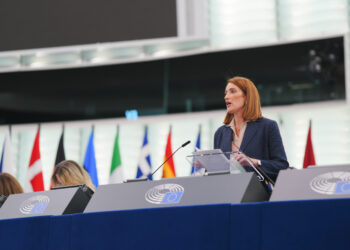
Poland has traditionally had very high levels of religiosity and the Church played a crucial role in the collapse of communism in 1989. But does religion still matter to Polish politics today? Aleks Szczerbiak writes that while the Church remains a totemic force in Polish society, the relationship between parties and religion in post-communist Poland is a complex one.


My new book published at the end of November examines the role of religion and the Catholic Church in post-communist Polish politics as seen through the lens of political parties’ relations with the Church and how they have used the religious-secular divide to mobilise support.

Poland has traditionally had very high levels of religiosity and the Church played a crucial historical role, notably in the process that led to the collapse of communism in 1989. In post-communist Poland, the Church and lay religious organisations were rare, exceptional examples of unusually powerful and well-organised civil society actors, a factor that led initially to the Polish Episcopate’s overt involvement in politics and created an incentive for parties to link up with it as a source of resources and support.

The Church’s power peaked in the early post-1989 period. Since then, it has seen a decline in its influence and prestige, in part due to the Church’s overt political involvement and a series of scandals, together within the fact that Polish society has been undergoing a process of “privatisation” of religious practice and secularisation, especially among younger Poles. Nonetheless, many remained “culturally” Catholic and continued to choose Catholicism as an important sphere of their lives and identity marker.

The Church is thus not simply a religious institution but still plays a significant role in Polish politics. It can react forcefully to perceived threats to its values and interests, and retains the capacity to set the terms of public debate and influence policymaking on key social issues such as abortion and the legal status of same-sex couples.

Moreover, over time leading elements within the Church adopted more subtle political strategies, acting more as a powerful interest group that governments had to consider and crucial point of reference around which parties orient their strategies. It particularly utilised the well-organised milieu clustered around the influential “religious right” Catholic “Radio Maryja” media conglomerate and social movement as its informal “political arm”.

Promoting Christian values while retaining strategic flexibility

There is, however, great complexity in the relationship between the Church and Polish parties. Both sides of the political divide defined themselves in relation to and positioned themselves on the religious issue to mobilise support from and appeal to specific segments of the electorate. Some right-wing parties, for example, sought to actively associate themselves with the Church’s moral authority and openly promoted its socio-political agenda to mobilise a conservative religious electorate by presenting themselves as defenders of traditional Christian values and national identity.

These included openly clerical-nationalist parties such as the Christian-National Union (ZChN) and League of Polish Families (LPR) that were moderately electorally successful junior governing parties in the 1990s and early-to-mid 2000s respectively, but also (particularly after 2004) the right-wing Law and Justice (PiS), Poland’s ruling party between 2005-7 and 2015-23 and currently the main opposition grouping.

However, the case of Law and Justice also illustrates that even more successful pro-clerical parties do not want to narrow their appeal by putting off more secular voters and deprive themselves of greater strategic flexibility by tying themselves too closely to the Church.

For a period in the early-to-mid 2000s, Poland’s current governing party, Civic Platform (now renamed the Civic Coalition – KO), represented a variation on this strategy. So too did the Polish Peasant Party (PSL), a successor to a communist “satellite” party that claims roots in the nineteenth century agrarian movement and was a minor governing party in coalitions with left-wing and liberal parties throughout much of the post-communist period.

Moreover, none of those parties that bore (or appeared to bear) some resemblance to the Christian Democracy party family were successful, while no successful right-wing or centre-right party could be objectively labelled as such. This was partly because the specific historical factors and conditions that were crucial to the formation of successful Christian Democratic parties in Western Europe were largely absent in Poland.

At the same time, the Church hierarchy was able to achieve virtually all of its initial political objectives without having to throw its moral weight and resources unambiguously behind a single pro-clerical party, Christian Democratic or otherwise. To a greater or lesser extent, for a long time virtually every Polish centre-right party stressed its commitment to Christian values and promoted policies sympathetic to the Church’s social teaching and political agenda.

Mobilising secularism and anti-clericalism

At the same time, many Poles opposed key elements of the Church’s public policy agenda, and its perceived political involvement inadvertently contributed to the development of an anti-clerical backlash. As a consequence, there were also parties that sought to mobilise political support around secularism, in some cases bordering on open anti-clericalism, by appealing to more liberal-left voters who believe that the Church has excessive influence on politics, particularly in relation to moral-cultural issues.

Notable among these was the communist successor Democratic Left Alliance (SLD), Poland’s main governing party for much of the 1990s, and its own organisational successor the New Left (Nowa Lewica), which has been a junior coalition partner in the Civic Coalition-led government since 2023.

Another significant “secularist”, arguably overtly anti-clerical, grouping was the socially liberal Palikot Movement (RP), formed by the one-time leading Civic Platform parliamentarian Janusz Palikot, and briefly successful in the early 2010s. Although the Palikot Movement was short-lived and no party emerged subsequently to mobilise solely around the issue of anti-clericalism, calls for a secular, “worldview neutral” state and a socially liberal policy agenda have become key identity markers for the Polish left.

The clerical-secular divide based on religiosity and attitudes towards the role of the Church in public life and its social and political agenda was thus a major source of political divisions in post-1989 Poland. Initially, this religious divide was a key element of, and often closely intertwined with, attitudes towards the communist past to produce a broader “post-communist divide”. This broadly distinguished those parties and voters with roots in the Solidarity opposition movement (often more pro-Church and conservative) from those associated with the former communist regime (often more secular and liberal).

The impact of these moral-cultural issues was, initially at least, more salient to voters than traditional socio-economic questions. But even after the salience of the “post-communist divide” faded in the mid-2000s with the emergence of the Civic Platform-Law and Justice duopoly, religiosity and attitudes towards the Church’s role in public life continued to function as a deep moral-cultural divide within Polish society and key determinant of left-right self-placement – and, therefore, party identification and voting behaviour. To this day, this continues to shape the political landscape and define the core left and right electorates.

A deep (but slowly fading?) moral-cultural faultline

In essence, despite secularisation and a decline in the Church’s influence and prestige, it remains a totemic force whose stance on key moral-cultural issues heavily influences public discourse and government actions. It also retains the capacity to react forcefully to attempts to introduce reforms perceived as a threat to its core values and interests.

Nonetheless, the relationship between parties and religion in post-communist Poland is a complex one. The religious-secular divide is not, and never has been, the sole axis of party competition and there has never been a strong Christian Democratic party of the kind found in Western Europe. Religion has affected Polish parties by acting as a significant and fundamental moral-cultural faultline that has inter-acted with other social and historical divides to influence party strategies and shape the structure of political competition.

Finally, with the recent rise of the radical right free-market Confederation (Konfederacja) grouping, it is worth noting the emergence of a new, potentially significant, secular right-wing electorate, particularly among younger voters, suggesting changes in how religion influences Polish party politics.

These voters are economically free-market but also socially liberal and do not identify with the institutional Church, creating a challenge for more traditional right-wing groupings such as Law and Justice that have relied heavily on their practising Catholic electoral base.

The Polish Embassy in London are organising a launch event for Aleks Szczerbiak’s new book at 5-7pm on Friday 28 November at 47 Portland Place, London, W1B 1JH. The event is free but you will need a formal invitation from the Embassy, so if you are interested in attending please contact Aleks at: a.a.szczerbiak@sussex.ac.uk.


Note: This article gives the views of the author, not the position of LSE European Politics or the London School of Economics.

Image credit: konradkerker provided by Shutterstock.


Source link

Previous Post

‘Absolutely not’: Emphatic reply as Eels coach opens up on ‘honest’ talks before Lomax exit

Next Post

COP30 outcome: slow progress, but insufficient to meet climate crisis urgency | News | European Parliament

Related Posts

Opening: 27-30 April plenary session in Strasbourg | News | European Parliament
News

Opening: 27-30 April plenary session in Strasbourg | News | European Parliament

27 April 2026
AI: press conference debrief on the negotiations to update EU rules | News | European Parliament
News

AI: press conference debrief on the negotiations to update EU rules | News | European Parliament

27 April 2026
2027 EU budget: press conference with lead MEP on Tuesday at 13.30 | News | European Parliament
News

2027 EU budget: press conference with lead MEP on Tuesday at 13.30 | News | European Parliament

27 April 2026
Rule of law in the EU: press conference on Tuesday 28 April at 15.30 CEST | News | European Parliament
News

Rule of law in the EU: press conference on Tuesday 28 April at 15.30 CEST | News | European Parliament

24 April 2026
Consent-based definition of rape in EU law: press conference Tuesday 28 April | News | European Parliament
News

Consent-based definition of rape in EU law: press conference Tuesday 28 April | News | European Parliament

24 April 2026
Metsola to EU leaders: “Europe cannot face a new era with an old budget” | News | European Parliament
News

Metsola to EU leaders: “Europe cannot face a new era with an old budget” | News | European Parliament

24 April 2026
Next Post
COP30 outcome: slow progress, but insufficient to meet climate crisis urgency | News | European Parliament

COP30 outcome: slow progress, but insufficient to meet climate crisis urgency | News | European Parliament

Discussion about this post

Recent News

Opening: 27-30 April plenary session in Strasbourg | News | European Parliament

Opening: 27-30 April plenary session in Strasbourg | News | European Parliament

27 April 2026
AI: press conference debrief on the negotiations to update EU rules | News | European Parliament

AI: press conference debrief on the negotiations to update EU rules | News | European Parliament

27 April 2026
2027 EU budget: press conference with lead MEP on Tuesday at 13.30 | News | European Parliament

2027 EU budget: press conference with lead MEP on Tuesday at 13.30 | News | European Parliament

27 April 2026
Titus Welliver & Trevante Rhodes Join ‘The Night Agent’

Titus Welliver & Trevante Rhodes Join ‘The Night Agent’

26 April 2026
‘Michael’ Breaks Box Office Records in First Weekend

‘Michael’ Breaks Box Office Records in First Weekend

26 April 2026
Best Robert Pattinson Movies of All Time Ranked

Best Robert Pattinson Movies of All Time Ranked

26 April 2026
‘FernGully’ to be remade in Live Action

‘FernGully’ to be remade in Live Action

25 April 2026
Amanda Seyfried & Rachel Zegler to Join Musical Pic ‘Octet’

Amanda Seyfried & Rachel Zegler to Join Musical Pic ‘Octet’

25 April 2026
Europe Times

Uniting Voices, Sharing Visions. Your trusted source for comprehensive coverage of the latest events, trends, and stories shaping our continent. Stay informed, inspired, and connected with Europe Times.

Browse by Category

  • Apps
  • Business
  • Education
  • Entertainment
  • Fashion
  • Food
  • Gadget
  • Gaming
  • Health
  • Lifestyle
  • Mobile
  • Movie
  • Music
  • News
  • Politics
  • Review
  • Science
  • Sports
  • Startup
  • Tech
  • Travel
  • World

Recent News

Opening: 27-30 April plenary session in Strasbourg | News | European Parliament

Opening: 27-30 April plenary session in Strasbourg | News | European Parliament

27 April 2026
AI: press conference debrief on the negotiations to update EU rules | News | European Parliament

AI: press conference debrief on the negotiations to update EU rules | News | European Parliament

27 April 2026

© 2024 Europe Times. All rights reserved.

No Result
View All Result
  • Home
  • News
  • Education
  • Tech
  • Entertainment
  • Lifestyle
  • Review

© 2024 Europe Times. All rights reserved.