




















Should animals have rights or just protections? In an interview with LSE’s Mike Wilkerson for the LSE iQ podcast, Jeff Sebo discusses the difference between rights and welfare, the problems with human exceptionalism, and why we all have a role to play in protecting the interests of animals.
What are the most important things to think about when we talk about protecting animals?
When people talk about animal protection, they might have very different forms of protection in mind. One might be environmental conservation. This would be a concern for animals as species or as part of biodiversity. But then we can also have a more individual approach to animal protection, and that could take the form of either welfare or rights.
Normally when people talk about animal welfare, what they have in mind is ensuring humane, compassionate treatment of animals when interacting with them, though that can still sometimes be seen as compatible with using animals for food or research or other human purposes. Giving animals rights, on the other hand, would be more similar to how we treat humans.
Animal rights are built on the idea that certain types of harmful activities are simply not acceptable, simply not permissible, no matter how much good they might do for humans. We simply should not use animals for food or use animals for research in invasive or lethal ways, even if we stand to benefit from it.
So even when people agree that we ought to be protecting animals, disagreements or uncertainties about whether that should take the form of conservation or welfare or rights – or some combination of all three – can really affect what kinds of goals people have and what kinds of strategies they pursue.
What is human exceptionalism?
Human exceptionalism is a concept that can have different meanings for different people. When I use it in my work, I use it to describe a moral stance that our species sometimes takes towards nonhumans, where we might think that they merit a little bit of consideration, but we think that we take priority.
In other words, human exceptionalism is based on the idea that humans matter the most. And if there is ever any kind of conflict between human interests and nonhuman interests, even trivial human interest should take priority over existential nonhuman interests. And that is a form of priority for our species that I think goes too far. This form of human exceptionalism ought to be challenged.
What do we mean when we talk about animal sentience and why is it important?
Sentience is generally understood as the capacity to consciously experience positive and negative states like pleasure or pain, happiness or suffering, satisfaction or frustration. If you are a sentient being, then it feels like something to be you.
And this is relevant to what types of protection you deserve and what types of rights you deserve. Because once you are sentient, you have interests. It matters to you what happens to you. And we as agents who in some sense control your fate have a responsibility to take your interests into account when making decisions that affect you.
Even if we granted animals rights, they would not be aware of them. Does this matter?
Some people think that animals deserve welfare protections, but not moral, legal and political rights. One reason for this is that while animals are sentient beings that can suffer and pursue goals, they are not rational agents capable of reflecting about laws and principles and knowingly and willingly entering into social contracts with us.
And according to some people, that ability is a requirement for having rights, because they think rights are part of a reciprocal arrangement where we get together and we all agree that you have rights against me and I have rights against you, and we all stand to benefit from these rights. As animals cannot do this, the argument is they only deserve a lesser form of protection like humane and compassionate treatment.
Now, I think that is wrong, and I think that when we look at even the history of human rights and justice, we can see why that is wrong. Even within our own species, not everybody can use the level of abstract, advanced language and reason needed to reflect about laws and principles or to knowingly and willingly enter into social contracts.
And yet they rightly do still deserve rights that reflect their own individual interests and needs and vulnerabilities. We appropriately recognise that this is true about members of our own species, and I think that we ought to also recognise that this can be true about members of other species.
Can animals meaningfully participate in this process?
It can be tempting for humans to think that we are the agents and that nonhuman animals are mere passive recipients of our generosity. The reality is that many nonhuman animals do have their own communication skills and their own reasoning skills.
They are, in their own way, able to express their interests and needs. Now, can they do that by voting in an election or running for public office? No, they cannot do that. But they can express themselves as part of our communities and we can listen to them a little bit more.
How we do that is difficult. We need to design institutions that incentivise human actors to faithfully understand and represent the interests of nonhuman animals. That can be done – we have tools for representing the interests of other nations, future generations and other nonparticipating stakeholders. But it takes a certain kind of thoughtful institutional design.
What are some of the key barriers to better protecting animals?
There are many obstacles that stand in the way of adequate protections for animals. These include epistemic barriers – a lack of knowledge about which animals are sentient and what they need – as well as practical and motivational barriers.
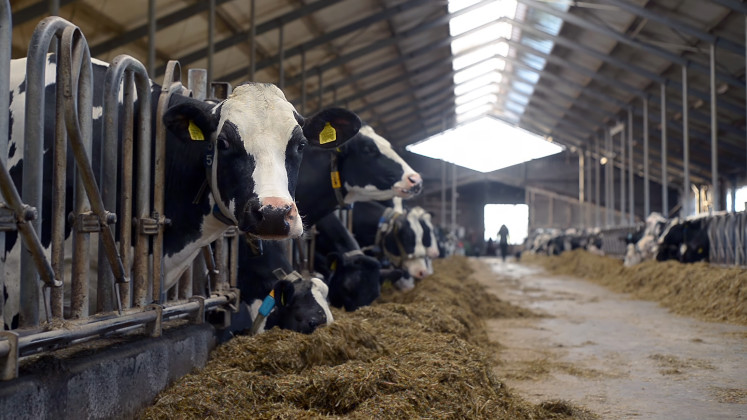
When we look at pigs, for example, we know that pigs are sentient, we know what they need to live well, but we do not yet fully have the infrastructure for replacing industrial animal agriculture with alternative food systems or the political will for accelerating that food system transition.
With octopuses, the situation is a little bit different. We have less knowledge about what they need, but we have a little bit more political will to avoid octopus farming. I think this is for the simple reason that we have not yet scaled it up and embedded it into our cultures and economies and so avoiding it is less costly for us individually and collectively.
The barriers change depending on the circumstances. But fundamentally, we need to increase our knowledge about animals, increase the resources and infrastructure for protecting animals and increase the political will to create these protections. This will require everybody to play a role.
Do we need individual approaches for each species or are broad principles enough?
The key requirements are similar for all animals – the need for increased knowledge, infrastructure and political will, as well as the social, legal, political, economic and technological processes to put protections in place.
But the details will look different in every case. That is part of what makes this so complicated. We are ultimately one species among millions. We are around 8 billion individuals among quintillions. And we can barely get it together to care for the 8 billion members of our own species, who we happen to know and like pretty well.
In contrast, we have never even studied the vast majority of species on our planet directly. We are simply making inferences based on certain model species that we have studied. So we are ultimately going to have to take a quite individualised approach, understanding each individual and each species on their own terms to the extent that is possible.
We may never be able to fully get there, but I think if we really invest in the science and invest in the infrastructure, we can at least get a lot closer to taking that more individualised, contextualised approach to caring for animals than the blanket approach that we see right now.
This interview features extracts from Should animals have rights?, an LSE iQ podcast episode.
Note: This article gives the views of the interviewee, not the position of LSE European Politics or the London School of Economics.
Image credit: wadstock provided by Shutterstock.




Discussion about this post