
















Russia occupies a unique position between Asia and Europe. Michael Khodarkovsky writes that today’s Russia can best be understood as a militarised society that, having formed on the steppe frontier, has grown into a vast multiethnic empire straddling the Eurasian continent while continually searching for its own identity.
In March 2023, Russian President Vladimir Putin signed his latest foreign policy doctrine, one that defined Russia as “a unique country-civilisation and a vast Eurasian and Euro-Pacific power that brings together the Russian people and other peoples belonging to the cultural and civilisational community of the Russian world”.
This new ideological footing combined two old ideas that the Russian authorities had tried to foster over the previous two decades with mixed success. One, known as “the Russian World”, intended to unite all Russians within and outside Russia on the basis of Russian language, Orthodox Christianity and general acceptance of shared Russian values.
The second idea, Eurasianism, emerged in the Russian émigré circles of the 1920s. The founders of Eurasianism presented a view of Russia as a civilisation apart, a product of both Europe and Asia.
Eurasianism was an attempt to reconcile old historic tensions: Russia was a nation state in Europe and a sprawling colonial empire in Asia; Russians were a dominant ethnicity but outnumbered by non-Russians; Orthodox Christianity was the state religion but in a country where one-third of its population belonged to other faiths. Eurasianism was a new vision of Russia as belonging, historically, geographically and culturally, to both Europe and Asia.
Russia, Asia and Europe
The Putin government revived the idea of Eurasianism to lay down its geopolitical claims on both sides of the continent. In substituting a modern Pax Russica for the old Soviet Union, Putin hoped to conceal Moscow’s imperial expansionism – something that deemphasising Russia’s western heritage was intended to bolster.
Ironically, the Kremlin’s spin masters’ claim of Eurasianism is perfectly valid. Russia has always been a thoroughly hybrid society, with roots and territories in both Europe and Asia. What is remarkable, however, is that throughout both Russian and Soviet imperial history, Russian rulers chose to disregard the country’s non-European origins and outright denied the colonial nature of its conquest and rule in Asia.
The tension between the vision of Russia as a Russian ethno-state and the uncomfortable reality of a multiethnic, multireligious empire had never been reconciled, and the ongoing debate among Russian intellectuals about where to moor a contemporary Russia, in Europe or in Asia, harks back to Russia’s unresolved national identity. It explains why westerners had no difficulty conceptualising the Ottomans, Persians or Chinese as an obvious “other”, while remaining uncertain where to place Russia on the civilisational scale.
Indeed, Russia can be best understood as a hybrid society formed under the influence of peoples and civilisations of both Asia and Europe. It combined the traditions of Rus, the Turko-Mongol world and Western Europe into one curious amalgam that blended the ideas of a universal monarchy and a national one.
A Eurasian empire
In my book, The Steppe and its Empires: The Russian Empire and its Eurasian Counterparts, I argue that, like other Eurasian empires, Russia belonged to the great Eurasian steppe, emerging as a frontier society with most of its resources directed toward ceaseless warfare.
Comparisons with other Eurasian empires reveal that, despite differences in religion, culture and ethnicity, these early modern empires shared a number of structural similarities that distinguished them from their European counterparts.
In the early 1500s, the steppe had become a part of an Islamic world framed by two large empires, the ancient empire of China in the east and the upstart empire of Muscovite Russia in the west.
The post-Mongol steppe produced nomadic conquerors who successfully imposed their dynasties and steppe customs onto vanquished civilisations: the Ottomans onto the Byzantine; the Safavids and Qajars onto the Persian; the Mughals onto the Indian; and the Qing onto the Chinese.
In this regard Russia was an exception. Founded on the distant frontiers of the Christian and Islamic worlds, the Muscovite lands held little attraction for the Mongol khans and their successors as an object of conquest and direct rule.
Thus, Moscow emerged in the post-Mongol world with its founding Riurik dynasty intact but presiding over a society that was equally an orphan of the Byzantine Christian and the Turko-Mongol steppe cultures. Positioned between Europe and Asia and occupying both, Russia became known as the most European empire in Asia and the most Asian empire in Europe.
Russia’s historical evolution must be understood within the context of its Eurasian neighbours. Russia’s structural similarities with the Eurasian empires of the Ottomans, Persians and Chinese were dictated by their shared experiences as frontier societies on the edge of the Eurasian steppe. Even as the Mongol heritage waned over time, the continuing presence of the steppe frontier with its bellicose nomadic societies shaped a political culture that substantially differed from that of the West.
Universal monarchy
To begin with, each Eurasian ruler conceived of himself as the sovereign of a universal, not national, empire. These rulers were confident in their superiority over other religious or political bodies and believed they were destined to rule the world, if not politically, at least rhetorically. They were autocrats whose subjects’ servile condition was a natural state.
Seen through the prism of a universal monarchy, the Eurasian imperial vision blurred the separation between metropolis and periphery, between the peoples within and outside the empire’s boundaries, between servitude and slavery. Whether they were elites or commoners, all were considered to be in personal servitude to an emperor and often referred to by a term interchangeable with slave.
Consequently, Eurasian societies did not develop either the notions or the institutions that could enshrine the idea of freedom. In the West, unfreedom for some meant freedom for others, but in Eurasia, the lack of freedom for serfs only served to further bond the military-service class to the state.
The unfreedom of everyone was a natural state, which, ironically, provided for greater inclusion and social mobility of outsiders than in the West. The price of inclusion was usually a religious conversion. In Russia, religious conversion provided numerous benefits until the early nineteenth century, when recognition of racial and ethnic characteristics began to limit the advancement of non-Russians.
Frontier policies
The concept of universal monarchy allowed for little differentiation between internal and external territories. This sort of political theology was inevitably translated into specific imperial policies, where peoples who were deemed non-sovereign were immediately ascribed a subject status. The imperial authorities demanded that their new subjects swear an oath of allegiance, submit hostages and provide tribute or military service.
But these claims of sovereignty over various chiefs and tribal leaders flew in the face of the frontier reality. In the meantime, a view from the steppe was different and more pragmatic than the one from the imperial capitals, where policymakers were caught in their own rhetoric of self-aggrandisement. What the imperial authorities believed to be unconditional allegiance was understood by the indigenous elites to be a treaty that sealed a mutually advantageous military alliance.
Non-titular elites
Bringing unruly non-state-organised societies under imperial control presented a constant challenge. In addition to the classic principle of “divide and rule”, Eurasian empires practiced a somewhat opposite policy of “include and rule”. Here, the non-titular ethnic elite was either fully assimilated, as in the Russian and Ottoman empires, or merely acculturated, as in Iran and Qing China.
This heavy reliance on non-titular ethnic elites stood in sharp contrast to the more homogeneous early modern European empires, where hereditary nobility and law traditionally served to limit the supremacy of a central authority and where compromise with the established national elites contributed to a national monarch’s success.
Eurasian emperors, in contrast, used the non-titular elite to check the power of the titular nobility, thus delaying the formation of a powerful hereditary elite and enhancing their own absolute power. In the end, however, the Eurasian empires’ policies, which look like an early form of identity politics, led to internal rivalry between different ethnic elites, followed by imperial decline.
Military-bureaucratic empires
The defining feature of the Eurasian empires was their military-bureaucratic nature, with a primary focus on war preparation and management. Government and military officials constituted a privileged class in societies whose members were defined solely by their service to the state. And because the state was exemplified by an emperor, the servile condition of the entire population was both assumed and practiced.
Most early modern Eurasian empires used conditional land grants to secure the military service of their cavalrymen. The conditional use of state lands to compensate the military, the late development of hereditary property, and a virtually absolute central authority were among the factors that prevented the Eurasian empires from developing a European-style feudalism and attendant institutions.
Perhaps the sharpest divide between the Eurasian and European empires, as well as among different Eurasian empires, lay in their conception of the law and of legal institutions. The Eurasian empires did not develop a legal system independent of the state or focused on individual rights, as emerged in Western Europe after the twelfth century.
Because the Eurasian empires were contiguous and not maritime, historians usually accepted the official rhetoric of the Eurasian imperial governments and denied their colonial nature. But apart from the Islamic empires, whose rule over non-Muslim populations was guided by Islamic principles and incompatible with a traditional colonial framework, Russian and Chinese empires can certainly be described as colonial.
Eurasian empires were formed and organised quite differently from their Western European counterparts. When placed in a comparative context with other Eurasian empires, Russia emerges as a hybrid empire riddled with ambiguities, sharing historical patterns with its Eurasian neighbours, often in denial of the reality on the ground.
A diverse multiethnic and multireligious political body of the empire demanded complex political, social and legal mechanisms that were not easily reconciled with the streamlining and homogenising tendencies of an autocratic state. When it came to the degree of servility of Russia’s population and its legal practices, Russia stood out as the most centralised and despotic, even among its Eurasian counterparts.
Russia’s current predicament may be better understood through the past experiences of a militarised society that, having formed on the steppe frontier, has over the centuries grown into a vast multiethnic empire straddling the Eurasian continent and continually searching for its own identity.
Michael Khodarkovsky will be speaking about his recent book, The Steppe and its Empires: The Russian Empire and its Eurasian Counterparts, at an LSE event on 28 May 2026.
Note: This article gives the views of the author, not the position of LSE European Politics or the London School of Economics.
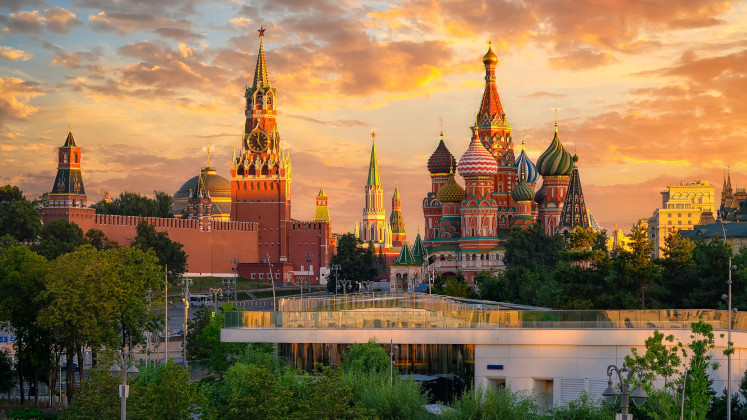
Image credit: Catarina Belova provided by Shutterstock.






Discussion about this post