













Tuesday, April 28, 2026
Europe Times
  • Home
  • News
    • All
    • Business
    • Politics
    • Science
    • World
    Opening: 27-30 April plenary session in Strasbourg | News | European Parliament

    Opening: 27-30 April plenary session in Strasbourg | News | European Parliament

    Press conference: assessing EU budget management | News | European Parliament

    Press conference: assessing EU budget management | News | European Parliament

    AI: press conference debrief on the negotiations to update EU rules | News | European Parliament

    AI: press conference debrief on the negotiations to update EU rules | News | European Parliament

    2027 EU budget: press conference with lead MEP on Tuesday at 13.30 | News | European Parliament

    2027 EU budget: press conference with lead MEP on Tuesday at 13.30 | News | European Parliament

    Rule of law in the EU: press conference on Tuesday 28 April at 15.30 CEST | News | European Parliament

    Rule of law in the EU: press conference on Tuesday 28 April at 15.30 CEST | News | European Parliament

    Consent-based definition of rape in EU law: press conference Tuesday 28 April | News | European Parliament

    Consent-based definition of rape in EU law: press conference Tuesday 28 April | News | European Parliament

    Trending Tags

    • Trump Inauguration
    • United Stated
    • White House
    • Market Stories
    • Election Results
  • Education
    Mafia, local governments and money – how fighting collusion reshapes EU investment –

    Mafia, local governments and money – how fighting collusion reshapes EU investment –

    Can Tisza restore Hungarian democracy? – LSE European Politics

    Can Tisza restore Hungarian democracy? – LSE European Politics

    How Hungary’s Tisza Party won everything, everywhere, all at once

    How Hungary’s Tisza Party won everything, everywhere, all at once

    In the age of AI, citizens may become more critical of human decision-makers

    In the age of AI, citizens may become more critical of human decision-makers

    Italy’s referendum – is the Italian right as united as it seems?

    Italy’s referendum – is the Italian right as united as it seems?

    What skills policy can tell us about the tunnel vision of policymakers

    What skills policy can tell us about the tunnel vision of policymakers

  • Tech
    • All
    • Apps
    • Gadget
    • Mobile
    • Startup
    How Hungary’s Tisza Party won everything, everywhere, all at once

    How Hungary’s Tisza Party won everything, everywhere, all at once

    Why enlargement is now a strategic priority for the EU

    Why enlargement is now a strategic priority for the EU

    Will reforms to the Better Regulation policy damage the EU’s legitimacy?

    Will reforms to the Better Regulation policy damage the EU’s legitimacy?

    The STEM gender gap – pipeline vs choice

    The STEM gender gap – pipeline vs choice

    Can Europe achieve digital sovereignty? – EUROPP

    Can Europe achieve digital sovereignty? – EUROPP

    The Dutch parliamentary election – not quite a “return to the centre”

    The Dutch parliamentary election – not quite a “return to the centre”

    Trending Tags

    • Nintendo Switch
    • CES 2017
    • Playstation 4 Pro
    • Mark Zuckerberg
  • Entertainment
    • All
    • Gaming
    • Movie
    • Music
    • Sports
    Titus Welliver & Trevante Rhodes Join ‘The Night Agent’

    Titus Welliver & Trevante Rhodes Join ‘The Night Agent’

    ‘Michael’ Breaks Box Office Records in First Weekend

    ‘Michael’ Breaks Box Office Records in First Weekend

    Best Robert Pattinson Movies of All Time Ranked

    Best Robert Pattinson Movies of All Time Ranked

    ‘FernGully’ to be remade in Live Action

    ‘FernGully’ to be remade in Live Action

    Amanda Seyfried & Rachel Zegler to Join Musical Pic ‘Octet’

    Amanda Seyfried & Rachel Zegler to Join Musical Pic ‘Octet’

    Best Movies Adapted from Video Games Ranked

    Best Movies Adapted from Video Games Ranked

  • Lifestyle
    • All
    • Fashion
    • Food
    • Health
    • Travel
    Was Tisza’s victory in Hungary the beginning of the end for illiberalism?

    Was Tisza’s victory in Hungary the beginning of the end for illiberalism?

    Can Tisza restore Hungarian democracy? – LSE European Politics

    Can Tisza restore Hungarian democracy? – LSE European Politics

    How Péter Magyar and Tisza remade the Hungarian party system – LSE European Politics

    How Péter Magyar and Tisza remade the Hungarian party system – LSE European Politics

    How Hungary’s Tisza Party won everything, everywhere, all at once

    How Hungary’s Tisza Party won everything, everywhere, all at once

    It’s time for a more pragmatic EU-China trade relationship

    It’s time for a more pragmatic EU-China trade relationship

    What should we expect from the next Hungarian government?

    What should we expect from the next Hungarian government?

    Trending Tags

    • Golden Globes
    • Game of Thrones
    • MotoGP 2017
    • eSports
    • Fashion Week
  • Review
    Best Robert Pattinson Movies of All Time Ranked

    Best Robert Pattinson Movies of All Time Ranked

    Best Movies Adapted from Video Games Ranked

    Best Movies Adapted from Video Games Ranked

    ‘Mr. Burton’ Exclusive Interview: Toby Jones

    ‘Mr. Burton’ Exclusive Interview: Toby Jones

    Movie Review: ‘Over Your Dead Body’

    Movie Review: ‘Over Your Dead Body’

    Movie Review: ‘Michael’

    Movie Review: ‘Michael’

    Movie Review: ‘Hamlet’ (2026)

    Movie Review: ‘Hamlet’ (2026)

No Result
View All Result
  • Home
  • News
    • All
    • Business
    • Politics
    • Science
    • World
    Opening: 27-30 April plenary session in Strasbourg | News | European Parliament

    Opening: 27-30 April plenary session in Strasbourg | News | European Parliament

    Press conference: assessing EU budget management | News | European Parliament

    Press conference: assessing EU budget management | News | European Parliament

    AI: press conference debrief on the negotiations to update EU rules | News | European Parliament

    AI: press conference debrief on the negotiations to update EU rules | News | European Parliament

    2027 EU budget: press conference with lead MEP on Tuesday at 13.30 | News | European Parliament

    2027 EU budget: press conference with lead MEP on Tuesday at 13.30 | News | European Parliament

    Rule of law in the EU: press conference on Tuesday 28 April at 15.30 CEST | News | European Parliament

    Rule of law in the EU: press conference on Tuesday 28 April at 15.30 CEST | News | European Parliament

    Consent-based definition of rape in EU law: press conference Tuesday 28 April | News | European Parliament

    Consent-based definition of rape in EU law: press conference Tuesday 28 April | News | European Parliament

    Trending Tags

    • Trump Inauguration
    • United Stated
    • White House
    • Market Stories
    • Election Results
  • Education
    Mafia, local governments and money – how fighting collusion reshapes EU investment –

    Mafia, local governments and money – how fighting collusion reshapes EU investment –

    Can Tisza restore Hungarian democracy? – LSE European Politics

    Can Tisza restore Hungarian democracy? – LSE European Politics

    How Hungary’s Tisza Party won everything, everywhere, all at once

    How Hungary’s Tisza Party won everything, everywhere, all at once

    In the age of AI, citizens may become more critical of human decision-makers

    In the age of AI, citizens may become more critical of human decision-makers

    Italy’s referendum – is the Italian right as united as it seems?

    Italy’s referendum – is the Italian right as united as it seems?

    What skills policy can tell us about the tunnel vision of policymakers

    What skills policy can tell us about the tunnel vision of policymakers

  • Tech
    • All
    • Apps
    • Gadget
    • Mobile
    • Startup
    How Hungary’s Tisza Party won everything, everywhere, all at once

    How Hungary’s Tisza Party won everything, everywhere, all at once

    Why enlargement is now a strategic priority for the EU

    Why enlargement is now a strategic priority for the EU

    Will reforms to the Better Regulation policy damage the EU’s legitimacy?

    Will reforms to the Better Regulation policy damage the EU’s legitimacy?

    The STEM gender gap – pipeline vs choice

    The STEM gender gap – pipeline vs choice

    Can Europe achieve digital sovereignty? – EUROPP

    Can Europe achieve digital sovereignty? – EUROPP

    The Dutch parliamentary election – not quite a “return to the centre”

    The Dutch parliamentary election – not quite a “return to the centre”

    Trending Tags

    • Nintendo Switch
    • CES 2017
    • Playstation 4 Pro
    • Mark Zuckerberg
  • Entertainment
    • All
    • Gaming
    • Movie
    • Music
    • Sports
    Titus Welliver & Trevante Rhodes Join ‘The Night Agent’

    Titus Welliver & Trevante Rhodes Join ‘The Night Agent’

    ‘Michael’ Breaks Box Office Records in First Weekend

    ‘Michael’ Breaks Box Office Records in First Weekend

    Best Robert Pattinson Movies of All Time Ranked

    Best Robert Pattinson Movies of All Time Ranked

    ‘FernGully’ to be remade in Live Action

    ‘FernGully’ to be remade in Live Action

    Amanda Seyfried & Rachel Zegler to Join Musical Pic ‘Octet’

    Amanda Seyfried & Rachel Zegler to Join Musical Pic ‘Octet’

    Best Movies Adapted from Video Games Ranked

    Best Movies Adapted from Video Games Ranked

  • Lifestyle
    • All
    • Fashion
    • Food
    • Health
    • Travel
    Was Tisza’s victory in Hungary the beginning of the end for illiberalism?

    Was Tisza’s victory in Hungary the beginning of the end for illiberalism?

    Can Tisza restore Hungarian democracy? – LSE European Politics

    Can Tisza restore Hungarian democracy? – LSE European Politics

    How Péter Magyar and Tisza remade the Hungarian party system – LSE European Politics

    How Péter Magyar and Tisza remade the Hungarian party system – LSE European Politics

    How Hungary’s Tisza Party won everything, everywhere, all at once

    How Hungary’s Tisza Party won everything, everywhere, all at once

    It’s time for a more pragmatic EU-China trade relationship

    It’s time for a more pragmatic EU-China trade relationship

    What should we expect from the next Hungarian government?

    What should we expect from the next Hungarian government?

    Trending Tags

    • Golden Globes
    • Game of Thrones
    • MotoGP 2017
    • eSports
    • Fashion Week
  • Review
    Best Robert Pattinson Movies of All Time Ranked

    Best Robert Pattinson Movies of All Time Ranked

    Best Movies Adapted from Video Games Ranked

    Best Movies Adapted from Video Games Ranked

    ‘Mr. Burton’ Exclusive Interview: Toby Jones

    ‘Mr. Burton’ Exclusive Interview: Toby Jones

    Movie Review: ‘Over Your Dead Body’

    Movie Review: ‘Over Your Dead Body’

    Movie Review: ‘Michael’

    Movie Review: ‘Michael’

    Movie Review: ‘Hamlet’ (2026)

    Movie Review: ‘Hamlet’ (2026)

No Result
View All Result
Europe Times
  • Home
  • News
  • Education
  • Tech
  • Entertainment
  • Lifestyle
  • Review
Home Lifestyle Health

What drives secessionism in Republika Srpska? – EUROPP

in Health, News, Politics, Science, World
Reading Time: 6 mins read
A A
0
What drives secessionism in Republika Srpska? – EUROPP
103
SHARES
1.3k
VIEWS
Share on FacebookShare on Twitter


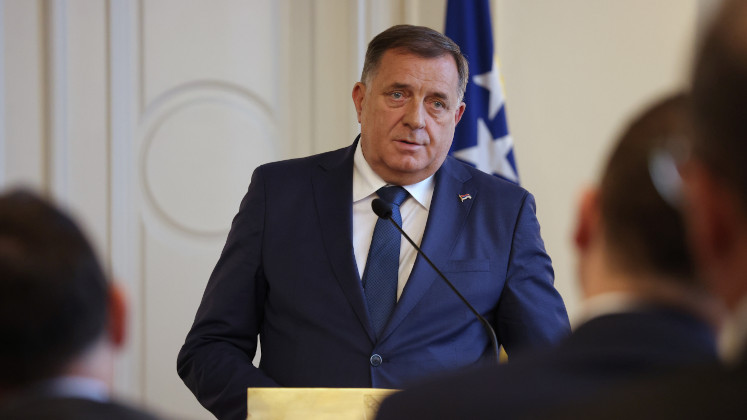
Milorad Dodik, the President of Republika Srpska, has a reputation for combining populist rhetoric with threats to secede from Bosnia and Herzegovina. But is this combination of populism and secessionism effective? Drawing on a new study, Semir Dzebo finds that populist appeals have surprisingly little impact on shaping secessionist attitudes among citizens.


In Republika Srpska, Bosnia and Herzegovina’s Serb-majority entity, President Milorad Dodik has spent over a decade combining populist appeals with secessionist demands, casting independence as both a democratic imperative and protection against hostile domestic and international elites.

But does this rhetoric actually work in drumming up support for secession among the public? In a recent study using original survey evidence, I find a striking disconnect: while populist framing serves Dodik’s political strategy at the elite level, it has failed to reshape the fundamental drivers of secessionist attitudes among ordinary citizens.

The case challenges conventional wisdom about how populism and nationalism fuse in territorial conflicts. Rather than creating new pathways to separatist mobilisation, populist-secessionist discourse in Republika Srpska operates primarily as an elite tool for navigating institutional constraints of secessionist advocacy, while mass attitudes remain anchored in traditional factors like ethnic identification and economic grievances.

The paradox of populist secessionism in power

The survey data from Republika Srpska reveals a seemingly counterintuitive pattern. Citizens with stronger populist attitudes – particularly those expressing anti-elite sentiments – are less likely to support secession and Dodik’s party, the Alliance of Independent Social Democrats (SNSD).

As populist attitudes increase, support for the SNSD decreases by approximately 5.4 percentage points for each standard deviation increase. In contrast, secessionist attitudes strongly predict party support, with a one standard deviation increase corresponding to a 16.5 percentage point rise in SNSD support.

Figure 1: Predicted probability of supporting the SNSD

Note: Black curves show predicted probabilities from logistic regression models. Grey points represent observed data, with one indicating SNSD support and zero indicating non-support. The charts indicate the predicted probability of supporting the SNSD decreases with higher populism scores and increases with higher preferences for Republika Srpska’s secession from Bosnia and Herzegovina.

This negative relationship between anti-elitism and secessionism reflects a broader theoretical puzzle about how populist attitudes manifest when populist leaders exercise prolonged control within autonomous institutional frameworks. After more than a decade of Dodik’s rule, anti-elite sentiments among Republika Srpska residents likely reflect dissatisfaction with his administration rather than with the external elites – Bosniak politicians, international representatives – he rhetorically targets.

This finding aligns with recent cross-national research showing that standard populist attitude measures effectively predict support for opposition populist parties but fail when populists hold power. In Republika Srpska’s case, this dynamic is amplified by substantial institutional autonomy under the Dayton Peace Agreement, creating a context where regional elites exercise considerable power while simultaneously positioning themselves as outsiders fighting against state-level and international authorities.

Traditional drivers still dominate

When comparing populist attitudes against traditional explanations for secessionism, the latter prove substantially more powerful. Identity-based factors are particularly influential. Ingroup bias – the perception of positive Serb exceptionalism – is the strongest predictor of secessionist preferences, while entitativity (the degree to which respondents perceive Bosnia and Herzegovina’s ethnic groups as forming a unified whole) shows a strong negative association with separatist attitudes.

Economic grievances also demonstrate robust effects. Perceptions of economic disadvantage or exploitation by central authorities significantly predict support for secession. This suggests that while ethnic framing dominates political discourse, material concerns provide crucial fuel for secessionist sentiment.

Additionally, the poor quality of perceived intergroup relations between Serbs and other ethnic groups (Bosniaks and Croats) significantly affects secessionist support. Poorer relations correlate with higher support for independence, highlighting how day-to-day ethnic tensions, rather than populist worldviews, shape territorial preferences in post-conflict societies.

Why populist framing persists despite limited mass appeal

If populist attitudes do not drive secessionist sentiment among citizens, why do leaders like Dodik continue to deploy populist-secessionist rhetoric? The answer lies in populism’s strategic utility for navigating institutional and legal constraints on territorial separation.

Dodik’s discourse exhibits all three core elements of populism. He invokes the “will of the people” as ultimate political authority, particularly regarding independence. His 2016 referendum on Republika Srpska’s national holiday, despite being ruled unconstitutional, exemplified this strategy, with Dodik stating that Republika Srpska had “with its law and the implemented referendum, clearly specified and shown what the will of this people is”.

His anti-elitism targets three allegedly colluding groups: domestic opposition in Republika Srpska, the Bosniak political elite and international representatives. This trinity of antagonists provides convenient scapegoats for any obstacles to independence. Finally, his Manichaean worldview frames Serbs as universally victimised. In his words, “Serbs are attacked in all places where they live… and everyone wants to paint us as the disruptive factor”.

This rhetorical package allows Dodik to present institutional resistance to secession not as legitimate legal or political opposition but as elite manipulation that subverts popular sovereignty. Populist framing thus helps circumvent constitutional constraints without directly confronting their legal validity, while obscuring the traditionally elite-driven nature of nationalist movements.

Implications for managing territorial conflicts

These findings carry significant implications for understanding and addressing territorial disputes in divided societies. First, they demonstrate that “thin” ideologies like populism can be strategically deployed without necessarily reshaping fundamental drivers of mass political attitudes. Policymakers should not assume that populist rhetoric automatically translates into corresponding shifts in public opinion.

Second, the persistence of traditional drivers – particularly ethnic identification, ingroup bias and economic grievances – suggests that responses to secessionist challenges must address these underlying factors rather than merely counter populist discourse. Comprehensive approaches should focus on improving intergroup relations and addressing perceived economic inequities.

Third, the negative relationship between anti-elitism and secessionism in contexts of prolonged populist rule suggests that such rhetoric may eventually undermine rather than reinforce separatist demands. This highlights potential limitations of populist-secessionist strategies when deployed by long-term incumbents operating within autonomous regional institutions.

Post-conflict institutions and the perpetuation of division

The dominance of traditional ethnic and economic drivers reflects the power of institutionalised ethnicity in post-conflict societies. The Dayton Agreement’s consociational framework, designed to end hostilities, inadvertently solidified ethnic categories as primary political identities.

This institutional entrenchment creates a self-reinforcing cycle: ethnic identification primes ingroup bias, which erodes any sense of shared civic nationhood, reinforcing perceptions of the state as an artificial construct forcing distinct groups together.

Post-conflict institutions, intended to manage ethnic conflict, can thus create conditions that perpetuate divisive attitudes and separatist ambitions. Breaking this cycle requires more than discursive interventions. It demands fundamental reconsideration of institutional arrangements that may be inadvertently fuelling the very divisions they were designed to manage.

Rethinking populist secessionism

The case of Republika Srpska reveals that populist secessionism operates at two distinct levels that do not necessarily align. While political elites strategically deploy populist rhetoric to advance separatist goals, this framing has not reshaped the fundamental drivers of mass secessionist attitudes. Citizens’ support for independence remains rooted in ethnic identification, ingroup favouritism, economic grievances and intergroup tensions – factors largely independent of populist worldviews.

As territorial conflicts persist across Europe, distinguishing between elite-level strategic discourse and mass-level motivations becomes important for maintaining stability. The challenge lies not in the populist moment but in addressing deeper questions of economic inequality, institutional design and intercommunal relations that make separatist appeals, however they are framed, persistently resonant in divided societies.

For more information, see the author’s recent study in Nations and Nationalism.


Note: This article gives the views of the author, not the position of LSE European Politics or the London School of Economics.

Image credit: European Union.


Subscribe to our newsletter


Source link

Previous Post

‘Shirts are getting a little tight’: Cheeky bulk-up call behind Aussie star’s hunt for home glory

Next Post

‘Absolutely stupid’: Poms confirm ‘amateurish’ plan as greats rip snubbing of pink-ball warm-up

Related Posts

Opening: 27-30 April plenary session in Strasbourg | News | European Parliament
News

Opening: 27-30 April plenary session in Strasbourg | News | European Parliament

27 April 2026
Press conference: assessing EU budget management | News | European Parliament
News

Press conference: assessing EU budget management | News | European Parliament

27 April 2026
AI: press conference debrief on the negotiations to update EU rules | News | European Parliament
News

AI: press conference debrief on the negotiations to update EU rules | News | European Parliament

27 April 2026
2027 EU budget: press conference with lead MEP on Tuesday at 13.30 | News | European Parliament
News

2027 EU budget: press conference with lead MEP on Tuesday at 13.30 | News | European Parliament

27 April 2026
Rule of law in the EU: press conference on Tuesday 28 April at 15.30 CEST | News | European Parliament
News

Rule of law in the EU: press conference on Tuesday 28 April at 15.30 CEST | News | European Parliament

24 April 2026
Consent-based definition of rape in EU law: press conference Tuesday 28 April | News | European Parliament
News

Consent-based definition of rape in EU law: press conference Tuesday 28 April | News | European Parliament

24 April 2026
Next Post
‘Absolutely stupid’: Poms confirm ‘amateurish’ plan as greats rip snubbing of pink-ball warm-up

‘Absolutely stupid’: Poms confirm ‘amateurish’ plan as greats rip snubbing of pink-ball warm-up

Discussion about this post

Recent News

Opening: 27-30 April plenary session in Strasbourg | News | European Parliament

Opening: 27-30 April plenary session in Strasbourg | News | European Parliament

27 April 2026
Press conference: assessing EU budget management | News | European Parliament

Press conference: assessing EU budget management | News | European Parliament

27 April 2026
AI: press conference debrief on the negotiations to update EU rules | News | European Parliament

AI: press conference debrief on the negotiations to update EU rules | News | European Parliament

27 April 2026
2027 EU budget: press conference with lead MEP on Tuesday at 13.30 | News | European Parliament

2027 EU budget: press conference with lead MEP on Tuesday at 13.30 | News | European Parliament

27 April 2026
Titus Welliver & Trevante Rhodes Join ‘The Night Agent’

Titus Welliver & Trevante Rhodes Join ‘The Night Agent’

26 April 2026
‘Michael’ Breaks Box Office Records in First Weekend

‘Michael’ Breaks Box Office Records in First Weekend

26 April 2026
Best Robert Pattinson Movies of All Time Ranked

Best Robert Pattinson Movies of All Time Ranked

26 April 2026
‘FernGully’ to be remade in Live Action

‘FernGully’ to be remade in Live Action

25 April 2026
Europe Times

Uniting Voices, Sharing Visions. Your trusted source for comprehensive coverage of the latest events, trends, and stories shaping our continent. Stay informed, inspired, and connected with Europe Times.

Browse by Category

  • Apps
  • Business
  • Education
  • Entertainment
  • Fashion
  • Food
  • Gadget
  • Gaming
  • Health
  • Lifestyle
  • Mobile
  • Movie
  • Music
  • News
  • Politics
  • Review
  • Science
  • Sports
  • Startup
  • Tech
  • Travel
  • World

Recent News

Opening: 27-30 April plenary session in Strasbourg | News | European Parliament

Opening: 27-30 April plenary session in Strasbourg | News | European Parliament

27 April 2026
Press conference: assessing EU budget management | News | European Parliament

Press conference: assessing EU budget management | News | European Parliament

27 April 2026

© 2024 Europe Times. All rights reserved.

No Result
View All Result
  • Home
  • News
  • Education
  • Tech
  • Entertainment
  • Lifestyle
  • Review

© 2024 Europe Times. All rights reserved.