









Friday, May 1, 2026
Europe Times
  • Home
  • News
    • All
    • Business
    • Politics
    • Science
    • World
    Parliament demands justice and accountability for civilian victims in Ukraine | News | European Parliament

    Parliament demands justice and accountability for civilian victims in Ukraine | News | European Parliament

    Parliament wants stronger action against cyberbullying in the EU | News | European Parliament

    Parliament wants stronger action against cyberbullying in the EU | News | European Parliament

    Digital Markets Act: MEPs want stronger enforcement amid external pushback | News | European Parliament

    Digital Markets Act: MEPs want stronger enforcement amid external pushback | News | European Parliament

    Human rights violations in Haiti, China and Venezuela | News | European Parliament

    Human rights violations in Haiti, China and Venezuela | News | European Parliament

    The hybrid empire – why Russia is a product of both Asia and Europe

    The hybrid empire – why Russia is a product of both Asia and Europe

    Parliament sounds the alarm over the state of fundamental rights in the EU | News | European Parliament

    Parliament sounds the alarm over the state of fundamental rights in the EU | News | European Parliament

    Trending Tags

    • Trump Inauguration
    • United Stated
    • White House
    • Market Stories
    • Election Results
  • Education
    Mafia, local governments and money – how fighting collusion reshapes EU investment –

    Mafia, local governments and money – how fighting collusion reshapes EU investment –

    Can Tisza restore Hungarian democracy? – LSE European Politics

    Can Tisza restore Hungarian democracy? – LSE European Politics

    How Hungary’s Tisza Party won everything, everywhere, all at once

    How Hungary’s Tisza Party won everything, everywhere, all at once

    In the age of AI, citizens may become more critical of human decision-makers

    In the age of AI, citizens may become more critical of human decision-makers

    Italy’s referendum – is the Italian right as united as it seems?

    Italy’s referendum – is the Italian right as united as it seems?

    What skills policy can tell us about the tunnel vision of policymakers

    What skills policy can tell us about the tunnel vision of policymakers

  • Tech
    • All
    • Apps
    • Gadget
    • Mobile
    • Startup
    How Hungary’s Tisza Party won everything, everywhere, all at once

    How Hungary’s Tisza Party won everything, everywhere, all at once

    Why enlargement is now a strategic priority for the EU

    Why enlargement is now a strategic priority for the EU

    Will reforms to the Better Regulation policy damage the EU’s legitimacy?

    Will reforms to the Better Regulation policy damage the EU’s legitimacy?

    The STEM gender gap – pipeline vs choice

    The STEM gender gap – pipeline vs choice

    Can Europe achieve digital sovereignty? – EUROPP

    Can Europe achieve digital sovereignty? – EUROPP

    The Dutch parliamentary election – not quite a “return to the centre”

    The Dutch parliamentary election – not quite a “return to the centre”

    Trending Tags

    • Nintendo Switch
    • CES 2017
    • Playstation 4 Pro
    • Mark Zuckerberg
  • Entertainment
    • All
    • Gaming
    • Movie
    • Music
    • Sports
    ‘Django/Zorro’ Movie Adaptation in the Works

    ‘Django/Zorro’ Movie Adaptation in the Works

    Tommy Lee Jones and Ice Cube Starring in ‘Outside Man’

    Tommy Lee Jones and Ice Cube Starring in ‘Outside Man’

    ‘Hokum’ Interview: Adam Scott and Director Damian McCarthy

    ‘Hokum’ Interview: Adam Scott and Director Damian McCarthy

    Head stars in 492-run blitz as fifth-straight win puts powerhouse on brink of elimination

    Head stars in 492-run blitz as fifth-straight win puts powerhouse on brink of elimination

    Tackle The Headline: Every AFL club’s most overpaid and underpaid player in 2026

    Tackle The Headline: Every AFL club’s most overpaid and underpaid player in 2026

    From Aussie boxing’s night of controversy… to the world stage: Ultimate guide to Tszyu’s return

    From Aussie boxing’s night of controversy… to the world stage: Ultimate guide to Tszyu’s return

  • Lifestyle
    • All
    • Fashion
    • Food
    • Health
    • Travel
    The hybrid empire – why Russia is a product of both Asia and Europe

    The hybrid empire – why Russia is a product of both Asia and Europe

    Was Tisza’s victory in Hungary the beginning of the end for illiberalism?

    Was Tisza’s victory in Hungary the beginning of the end for illiberalism?

    Can Tisza restore Hungarian democracy? – LSE European Politics

    Can Tisza restore Hungarian democracy? – LSE European Politics

    How Péter Magyar and Tisza remade the Hungarian party system – LSE European Politics

    How Péter Magyar and Tisza remade the Hungarian party system – LSE European Politics

    How Hungary’s Tisza Party won everything, everywhere, all at once

    How Hungary’s Tisza Party won everything, everywhere, all at once

    It’s time for a more pragmatic EU-China trade relationship

    It’s time for a more pragmatic EU-China trade relationship

    Trending Tags

    • Golden Globes
    • Game of Thrones
    • MotoGP 2017
    • eSports
    • Fashion Week
  • Review
    Movie Review: ‘Hokum’

    Movie Review: ‘Hokum’

    Movie Review: ‘The Devil Wears Prada 2’

    Movie Review: ‘The Devil Wears Prada 2’

    Best Robert Pattinson Movies of All Time Ranked

    Best Robert Pattinson Movies of All Time Ranked

    Best Movies Adapted from Video Games Ranked

    Best Movies Adapted from Video Games Ranked

    ‘Mr. Burton’ Exclusive Interview: Toby Jones

    ‘Mr. Burton’ Exclusive Interview: Toby Jones

    Movie Review: ‘Over Your Dead Body’

    Movie Review: ‘Over Your Dead Body’

No Result
View All Result
  • Home
  • News
    • All
    • Business
    • Politics
    • Science
    • World
    Parliament demands justice and accountability for civilian victims in Ukraine | News | European Parliament

    Parliament demands justice and accountability for civilian victims in Ukraine | News | European Parliament

    Parliament wants stronger action against cyberbullying in the EU | News | European Parliament

    Parliament wants stronger action against cyberbullying in the EU | News | European Parliament

    Digital Markets Act: MEPs want stronger enforcement amid external pushback | News | European Parliament

    Digital Markets Act: MEPs want stronger enforcement amid external pushback | News | European Parliament

    Human rights violations in Haiti, China and Venezuela | News | European Parliament

    Human rights violations in Haiti, China and Venezuela | News | European Parliament

    The hybrid empire – why Russia is a product of both Asia and Europe

    The hybrid empire – why Russia is a product of both Asia and Europe

    Parliament sounds the alarm over the state of fundamental rights in the EU | News | European Parliament

    Parliament sounds the alarm over the state of fundamental rights in the EU | News | European Parliament

    Trending Tags

    • Trump Inauguration
    • United Stated
    • White House
    • Market Stories
    • Election Results
  • Education
    Mafia, local governments and money – how fighting collusion reshapes EU investment –

    Mafia, local governments and money – how fighting collusion reshapes EU investment –

    Can Tisza restore Hungarian democracy? – LSE European Politics

    Can Tisza restore Hungarian democracy? – LSE European Politics

    How Hungary’s Tisza Party won everything, everywhere, all at once

    How Hungary’s Tisza Party won everything, everywhere, all at once

    In the age of AI, citizens may become more critical of human decision-makers

    In the age of AI, citizens may become more critical of human decision-makers

    Italy’s referendum – is the Italian right as united as it seems?

    Italy’s referendum – is the Italian right as united as it seems?

    What skills policy can tell us about the tunnel vision of policymakers

    What skills policy can tell us about the tunnel vision of policymakers

  • Tech
    • All
    • Apps
    • Gadget
    • Mobile
    • Startup
    How Hungary’s Tisza Party won everything, everywhere, all at once

    How Hungary’s Tisza Party won everything, everywhere, all at once

    Why enlargement is now a strategic priority for the EU

    Why enlargement is now a strategic priority for the EU

    Will reforms to the Better Regulation policy damage the EU’s legitimacy?

    Will reforms to the Better Regulation policy damage the EU’s legitimacy?

    The STEM gender gap – pipeline vs choice

    The STEM gender gap – pipeline vs choice

    Can Europe achieve digital sovereignty? – EUROPP

    Can Europe achieve digital sovereignty? – EUROPP

    The Dutch parliamentary election – not quite a “return to the centre”

    The Dutch parliamentary election – not quite a “return to the centre”

    Trending Tags

    • Nintendo Switch
    • CES 2017
    • Playstation 4 Pro
    • Mark Zuckerberg
  • Entertainment
    • All
    • Gaming
    • Movie
    • Music
    • Sports
    ‘Django/Zorro’ Movie Adaptation in the Works

    ‘Django/Zorro’ Movie Adaptation in the Works

    Tommy Lee Jones and Ice Cube Starring in ‘Outside Man’

    Tommy Lee Jones and Ice Cube Starring in ‘Outside Man’

    ‘Hokum’ Interview: Adam Scott and Director Damian McCarthy

    ‘Hokum’ Interview: Adam Scott and Director Damian McCarthy

    Head stars in 492-run blitz as fifth-straight win puts powerhouse on brink of elimination

    Head stars in 492-run blitz as fifth-straight win puts powerhouse on brink of elimination

    Tackle The Headline: Every AFL club’s most overpaid and underpaid player in 2026

    Tackle The Headline: Every AFL club’s most overpaid and underpaid player in 2026

    From Aussie boxing’s night of controversy… to the world stage: Ultimate guide to Tszyu’s return

    From Aussie boxing’s night of controversy… to the world stage: Ultimate guide to Tszyu’s return

  • Lifestyle
    • All
    • Fashion
    • Food
    • Health
    • Travel
    The hybrid empire – why Russia is a product of both Asia and Europe

    The hybrid empire – why Russia is a product of both Asia and Europe

    Was Tisza’s victory in Hungary the beginning of the end for illiberalism?

    Was Tisza’s victory in Hungary the beginning of the end for illiberalism?

    Can Tisza restore Hungarian democracy? – LSE European Politics

    Can Tisza restore Hungarian democracy? – LSE European Politics

    How Péter Magyar and Tisza remade the Hungarian party system – LSE European Politics

    How Péter Magyar and Tisza remade the Hungarian party system – LSE European Politics

    How Hungary’s Tisza Party won everything, everywhere, all at once

    How Hungary’s Tisza Party won everything, everywhere, all at once

    It’s time for a more pragmatic EU-China trade relationship

    It’s time for a more pragmatic EU-China trade relationship

    Trending Tags

    • Golden Globes
    • Game of Thrones
    • MotoGP 2017
    • eSports
    • Fashion Week
  • Review
    Movie Review: ‘Hokum’

    Movie Review: ‘Hokum’

    Movie Review: ‘The Devil Wears Prada 2’

    Movie Review: ‘The Devil Wears Prada 2’

    Best Robert Pattinson Movies of All Time Ranked

    Best Robert Pattinson Movies of All Time Ranked

    Best Movies Adapted from Video Games Ranked

    Best Movies Adapted from Video Games Ranked

    ‘Mr. Burton’ Exclusive Interview: Toby Jones

    ‘Mr. Burton’ Exclusive Interview: Toby Jones

    Movie Review: ‘Over Your Dead Body’

    Movie Review: ‘Over Your Dead Body’

No Result
View All Result
Europe Times
  • Home
  • News
  • Education
  • Tech
  • Entertainment
  • Lifestyle
  • Review
Home News Business

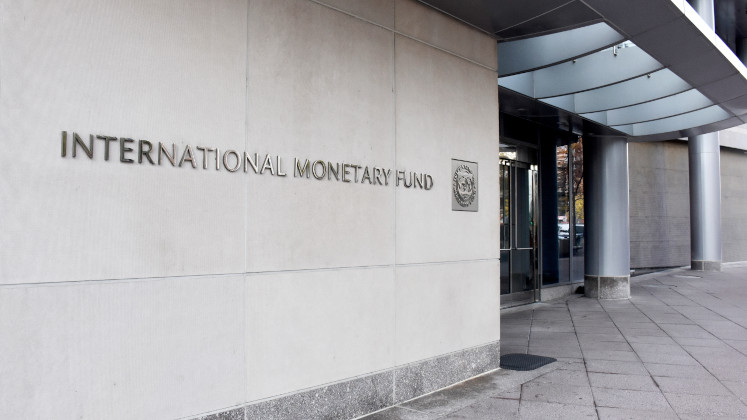
Will the IMF survive Donald Trump’s presidency?

in Business, Food, News, Politics, Review, World
Reading Time: 9 mins read
A A
0
Will the IMF survive Donald Trump’s presidency?
103
SHARES
1.3k
VIEWS
Share on FacebookShare on Twitter


Robert H. Wade examines what American disengagement and growing resentment among emerging market and developing countries mean for the future of the IMF.


It is now widely recognised that the world has moved into a more chaotic state than a decade and more ago. The “global liberal order” is wounded (though not broken), as the internally polarised US cuts back on its “responsibility” to lead this order while it insists on its continuing claims to unilateral “greatness”, allowing no one else to challenge its dominance.

This raises the question of how likely it is that international organisations from the 20th century will survive in our more chaotic world. UN Secretary-General António Guterres sounded downbeat when he said at the BRICS summit in Johannesburg in 2023 that the Bretton Woods institutions “reflect yesterday’s world”.

The Heritage Foundation’s detailed blueprint for the second Trump government, Project 2025, calls for the US to leave both the IMF and the World Bank, as well as the other multilateral development banks. A DOGE (Department of Government Efficiency) primer lays out the rationale in the case of the multilateral development banks.

It states that, “the articles of organisation of each of these organisations provide for members leaving… they get their money back. The US has more than $70 billion in appropriated and expended donations to these institutions. Withdrawing from all of them would return to the US Treasury vast sums to make room for President Trump’s tax cuts. A second important issue to clarify is the fact that the [multilateral development banks] have failed at all aspects of their ever-evolving missions.”

Note the irony. For 80 years, critics of the World Bank have said that it is governed to the disproportionate benefit of the United States. Now Trump and his allies say that the United States is its victim. Note too that they give no weight to US soft power.

Against this backdrop, can an organisation like the IMF hope to survive? For all the hostility the Trump government directs towards multilateral organisations in general and the multilateral development banks specifically, I argue there are good reasons to think it can.

Positive indicators

The IMF still meets a strong “collective need” in the world economy and has few competitors. It performs several critical, widely agreed functions in the world economy: an emergency source of finance when other lenders will not lend quickly; a collective discipline on national governments to reduce the chances that they need emergency loans and raise the chances that they repay loans; a coordinator of foreign debt restructuring when necessary.

The case in point is that the early Reagan government tried to “defund” the IMF and cut its staff, only to reverse gear when the 1982 Mexican and wider Latin American financial crisis hit. The functional need is all the stronger today because the fragmentation of the world order and the increasing politicisation of international finance by the US, Europe and China raise the vulnerability of all but the biggest economies to foreign economic shocks and accumulation of unpayable debts.

The IMF also has no real competitors (while the World Bank has several). Alternatives such as the Chiang Mai Initiative for members of the Association of Southeast Asian Nations and the Contingent Reserve Arrangement for the BRICS coalition (Brazil, Russia, India, China and South Africa) have been little used and have rules tying borrowing to IMF agreements.

Another positive indicator is that in 2021, the IMF’s Board of Governors approved a new allocation of Special Drawing Rights (an international reserve asset created by the Fund in 1969), equivalent to US$650 billion, to boost the IMF’s lending resources and global liquidity generally. The popularity of the IMF’s Resilience and Sustainability Facility, created in 2023, is also a sign of its continued relevance.

Resentment and loss of interest

However, while the above factors improve the IMF’s future prospects, these prospects are clouded by the concentration of influence in the hands of the US and European states and the continuing marginalisation of states of the global south, especially China.

The IMF and the World Bank were created eight decades ago when large parts of the non-western world were still formal colonies of western states and others were informal colonies. Unsurprisingly, the western states, led by the US, created rules that concentrated “influence” (including the share of votes and representation in the governing bodies) in their own hands.

Remarkably, western states (plus Japan), which today account for about 17% of the world population, continue to enjoy highly concentrated influence in these organisations, almost as much as in 1945. It is as though the emerging “multipolarity” or “pluralisation” of the world order has not taken place. This is a source of both resentment and loss of interest on the part of governments and officials in many emerging markets and developing countries, especially the big ones.

This is exacerbated by the use of western influence to push developing countries to open their economies to more-or-less free trade and finance, deregulate large areas of economic activity, privatise state-owned enterprises and natural resources and, more generally, expand the scope of markets and shrink the role of the state. The IMF presents these conditions as impartial and technocratic, but some of the large developing countries resent their marginalisation in the formulation of Fund policy and are looking to develop alternatives.

Trump and the IMF

Political developments in the United States present additional challenges. As the world economy grows, the IMF and the World Bank must ask member states to grant them more capital to boost their equity base. Long before Trump, the US Congress has resisted handing over more US “taxpayers’ dollars” to these and other multilateral organisations. It took the US Treasury five years, from 2010 to 2015, to persuade enough congressional representatives to approve the quota increase negotiated and approved by all member government except the US in 2010 (the 14th Quota Review).

This is a key dilemma for the Fund. On the one hand, the US legislature resists approving increased funding for the IMF, even as the world economy grows. On the other hand, the US government insists it should be the single largest shareholder and the only state with a veto, which sets a limit on the capital granted by others.

The situation is further complicated by the return of Trump. He has long expressed disdain for multilateral cooperation and a preference for bilateral deals, where the US mostly has the upper hand. He has also been dismissive of Europe and the whole western alliance, while his chief advisor, Elon Musk, seems obsessed with gunning for regime change in allied democracies.

Trump and those he has appointed to top positions agree that globalisation and free trade have harmed the US economy by shifting critical industries abroad and making the US run huge trade deficits. They say it is critical that the US raises tariffs to cut imports, even from close allies.

This win-lose, confrontational worldview is inconsistent with the pro-globalisation, pro-free trade, anti-industrial policy agenda that the IMF and the World Bank have promoted. The 900-page Project 2025 blueprint calls for the US to “withdraw from both the World Bank and the IMF” and the DOGE primer mentioned above lays out a detailed plan for how this might be achieved.

This may be a threat to gain more US leverage. If the US left, it would lose some of its ability to use multilateralism to advance bilateral interests “in disguise”. For example, Argentina’s debt to the IMF is already far above the legal limit – $44 billion. Trump and his allies are keen to support Javier Milei’s government in Argentina, including with even more loans. But they would find it difficult to persuade the US Congress to fund bilateral loans. It would be easier to make the IMF give Argentina a favourable deal. The US threat of withdrawing from the Fund could give it useful leverage in this respect.

Indeed, Project 2025 contradicts itself as in addition to calling for a US withdrawal from the IMF and World Bank, it also calls for the US to “force reforms and new policies” through in both. Assuming the US does not leave, Trump will likely attempt to increase US influence and cut the Fund’s lending (unless a major global financial crisis intervenes). Trump and Musk are famously determined to make radical cuts in US federal government spending and the odds are they will try the same in the IMF.

Meanwhile, the Chinese government has indicated it is happy to increase its contribution, provided the IMF’s rules, including the quota distribution, are changed in its favour. In effect, China is indicating that it will raise its financial contributions in return for substantial governance reform but will otherwise lose interest in the IMF and let it to wither in the face of US disengagement.

Will the IMF survive?

One of the dangers in the current state of disorder is that the IMF is even more vulnerable than before to arm-twisting by one of the three biggest economies: the US, the EU and China.

We have seen over the past two decades what happens when the Fund deals with these entities in a spirit of mutual non-aggression, such as when downplaying US fiscal deficits, China’s gigantic current account surpluses and its role in the EU’s disastrous imposition of austerity during the Eurozone crisis. We are also now seeing how these three entities are affecting growth in developing regions and even specific countries by using geopolitical criteria to select which ones get to produce their imports and which do not.

Yet there are steps that can be taken to improve the IMF’s chances of survival. First, it should narrow its agenda and expertise around cross-border spillovers and macroeconomic stability, leaving other urgent global challenges like climate change, pandemics, food security, trade wars and migration to other bodies. Failing to do so opens the door even more to what Adam Posen describes as “the geopolitical machinations of large-economy governments and the market flows they influence”. The golden rule is “stick to core functions and maintain operational independence.”

Second, the IMF must have well-defended operational independence, like central banks and the Bank for International Settlements (BIS). It can then assure member states, including the big three, that it will not dispense politicised conditionality or allocate funds unfairly to the allies of one or other of its most powerful members.

Third, there is a need for governance reform to raise the share of quotas and votes going to many emerging market and developing countries, notably China and India. More influence in the Fund could help to limit the incentives for these countries to build-up self-insurance against macroeconomic shocks, such as accumulating high foreign exchange reserves that would be better used for development purposes. This should be accompanied by qualified majority voting on the Board of Executive Directors, with the US veto either given up or limited to narrow constitutional issues.

These measures are unlikely any time soon because “veto power protects veto power” and the US, Japan and the EU would be united in opposing them. But several improvements can be made without directly hitting the formal allocation of power. One is to reverse the earlier rule change that allowed the Fund to lend to a country (Ukraine) at war on the basis that lending to a country at war sends the signal that it is siding with one side and against the other.

A second is for the IMF to have powers to discipline countries with persistent and overly large trade surpluses. This should win support from the US government. A third is for the IMF to employ more non-mainstream economists who think beyond the assumptions that markets are the key institution, that free trade and a limited state produce higher growth, and who treat production as more than an afterthought. This might make policies more complex, but also more effective if combined with in-depth knowledge of the country in question. Many countries, including the US and UK, are now doubling down on industrial policy, a previously toxic subject.

In short, the IMF will probably survive, because it meets a widely agreed collective need of the world economy and alternatives are hard to create. The big question will be whether it can limit its vulnerability to arm-twisting by the big three and allow them minimal scope to use the Fund as a multilateral tool to advance national interests.

But if Trump and DOGE decide to follow the principle that withdrawing from the IMF, World Bank and multilateral development banks “would return to the US Treasury vast sums to make room for President Trump’s tax cuts” – as though US “soft power” counts for nothing – all bets are off. Fund insiders say that senior staff are rattled, and Europeans are preparing contingency plans for relocating the Fund to Brussels, Frankfurt or Paris. But Japan is the IMF’s second biggest shareholder, so maybe the IMF will move to Tokyo if the US withdraws.

Robert H. Wade will be speaking at an LSE event on 11 February – “Is there a new Washington consensus?” – hosted by the Phelan United States Centre.


Note: This article gives the views of the author, not the position of EUROPP – European Politics and Policy or the London School of Economics. Featured image credit: refrina / Shutterstock.com



Source link

Previous Post

Ruslan Stefanchuk: “Peace in Ukraine can only be achieved if we stay strong” | News | European Parliament

Next Post

Movie Review: ‘Paddington in Peru’

Related Posts

Parliament demands justice and accountability for civilian victims in Ukraine | News | European Parliament
News

Parliament demands justice and accountability for civilian victims in Ukraine | News | European Parliament

30 April 2026
Parliament wants stronger action against cyberbullying in the EU | News | European Parliament
News

Parliament wants stronger action against cyberbullying in the EU | News | European Parliament

30 April 2026
Digital Markets Act: MEPs want stronger enforcement amid external pushback | News | European Parliament
News

Digital Markets Act: MEPs want stronger enforcement amid external pushback | News | European Parliament

30 April 2026
Human rights violations in Haiti, China and Venezuela | News | European Parliament
News

Human rights violations in Haiti, China and Venezuela | News | European Parliament

30 April 2026
The hybrid empire – why Russia is a product of both Asia and Europe
Fashion

The hybrid empire – why Russia is a product of both Asia and Europe

30 April 2026
Movie Review: ‘Hokum’
Movie

Movie Review: ‘Hokum’

29 April 2026
Next Post
Movie Review: ‘Paddington in Peru’

Movie Review: ‘Paddington in Peru’

Discussion about this post

Recent News

‘Django/Zorro’ Movie Adaptation in the Works

‘Django/Zorro’ Movie Adaptation in the Works

30 April 2026
Tommy Lee Jones and Ice Cube Starring in ‘Outside Man’

Tommy Lee Jones and Ice Cube Starring in ‘Outside Man’

30 April 2026
Parliament demands justice and accountability for civilian victims in Ukraine | News | European Parliament

Parliament demands justice and accountability for civilian victims in Ukraine | News | European Parliament

30 April 2026
Parliament wants stronger action against cyberbullying in the EU | News | European Parliament

Parliament wants stronger action against cyberbullying in the EU | News | European Parliament

30 April 2026
Digital Markets Act: MEPs want stronger enforcement amid external pushback | News | European Parliament

Digital Markets Act: MEPs want stronger enforcement amid external pushback | News | European Parliament

30 April 2026
Human rights violations in Haiti, China and Venezuela | News | European Parliament

Human rights violations in Haiti, China and Venezuela | News | European Parliament

30 April 2026
The hybrid empire – why Russia is a product of both Asia and Europe

The hybrid empire – why Russia is a product of both Asia and Europe

30 April 2026
‘Hokum’ Interview: Adam Scott and Director Damian McCarthy

‘Hokum’ Interview: Adam Scott and Director Damian McCarthy

30 April 2026
Europe Times

Uniting Voices, Sharing Visions. Your trusted source for comprehensive coverage of the latest events, trends, and stories shaping our continent. Stay informed, inspired, and connected with Europe Times.

Browse by Category

  • Apps
  • Business
  • Education
  • Entertainment
  • Fashion
  • Food
  • Gadget
  • Gaming
  • Health
  • Lifestyle
  • Mobile
  • Movie
  • Music
  • News
  • Politics
  • Review
  • Science
  • Sports
  • Startup
  • Tech
  • Travel
  • World

Recent News

‘Django/Zorro’ Movie Adaptation in the Works

‘Django/Zorro’ Movie Adaptation in the Works

30 April 2026
Tommy Lee Jones and Ice Cube Starring in ‘Outside Man’

Tommy Lee Jones and Ice Cube Starring in ‘Outside Man’

30 April 2026

© 2024 Europe Times. All rights reserved.

No Result
View All Result
  • Home
  • News
  • Education
  • Tech
  • Entertainment
  • Lifestyle
  • Review

© 2024 Europe Times. All rights reserved.